

Steps in Quantitative Data Analysis
July 24, 2019
METHODS USED FOR QUALITATIVE DATA COLLECTION
August 13, 2019Sampling Quantitative Techniques For Data analysis
- Home
- Blog
- Sampling Quantitative Techniques For Data analysis
Meta Analysis Service
- Understanding Quantitative Sampling Techniques
- Benefits of Quantitative Sampling Techniques
- Importance of Sampling Methods for Data Analysis
- Major Quantitative Sampling Techniques
- Comparison of Sampling Methods for Data Analysis
- Choosing the Right Sampling Methods for Data Analysis
- Challenges in Statistical Data Analysis and Sampling
- How Professional Support Improves Sampling Accuracy
- Conclusion
Recommended Reads
Contact us
Summary:
Statistical table interpretation is critical in minimizing errors during research writing. Correct interpretation of SPSS results, regression tables, hypothesis test tables, and correlation tables can help in avoiding any form of confusion and errors in research writing. Reliable statistical interpretation services will be helpful for researchers in delivering quality research work. Statswork offers professional statistical table interpretation services for researchers.
Quantitative sampling methodologies are quite significant when it comes to modern research and analysis. Scientists can utilize several types of sampling methods for analyzing their data, whereby they can pick smaller groups from bigger sets to be able to come up with reliable results without investigating everyone [1]. There are numerous types of sampling strategies such as random sampling methodology in research, stratified sampling strategy, and systematic sampling approach that can aid one to obtain reliable data.
Understanding Quantitative Sampling Techniques
In this case, sampling means the process by which one selects samples or data points from the entire population. It involves obtaining a sample that reflects the properties of the target population.
Quantitative sampling methods make it easy for researchers to work with collected data and at the same time ensure high accuracy. This is because sampling methods play an important role in statistical data analysis.
Sampling is commonly used by organizations and institutions for research and data analysis to examine customers’ behavior, healthcare, education, and much more.
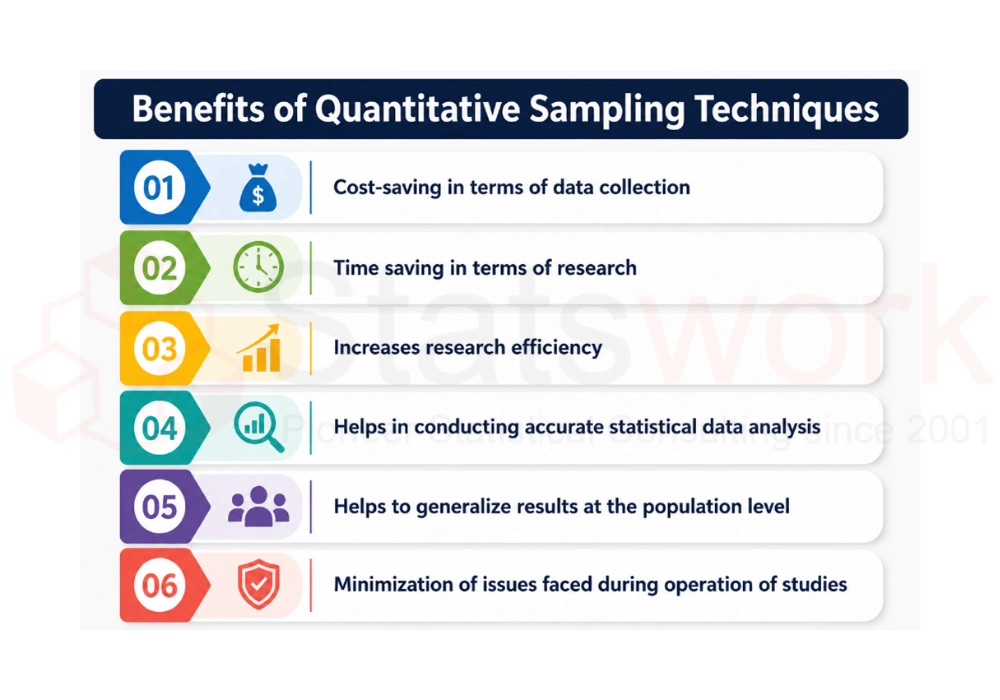
Benefits of Quantitative Sampling Techniques
- Cost-saving in terms of data collection
- Helps to generalize results at the population level
- Minimization of issues faced during operation of studies [2]
Importance of Sampling Methods for Data Analysis
Sampling is an integral part of conducting good research study. The effectiveness of sampling ensures that the samples selected properly represent the wider population.
Incorrect choice of sampling technique could cause the research to be flawed and thus not credible. To enhance research validity, one needs to identify effective sampling techniques.
By using correct sampling procedures, the researcher can:
- Ensure that the data is representative
- Avoid sampling errors
- Add credibility to the research
- Statistically make the data valid
- Draw sound conclusions
- Make evidence-based decisions
Sample selection forms the foundation of good statistical data analysis [3].
Major Quantitative Sampling Techniques
Several quantitative sampling procedures are used by researchers depending on various factors such as the study objectives, population characteristics, and resources at hand.
1. Random Sampling in Research
Random sampling in research is one of the most common probability sampling techniques utilized by researchers. Random sampling involves everyone in the entire population having an equal likelihood of being selected into the sample.
The researcher can opt to use either software, a lottery system, or a random number generator while carrying out the sampling process. Random sampling in research is much appreciated due to its impartiality.
Benefits
- Eliminates selection bias
- Ensures representation in sampling
- Facilitates generalization statistically
- Promotes the validity of research
- Easy to conduct and comprehend
Drawbacks
- Needs a complete listing of the population
- Can be hard for extremely large populations [4]
Sample
A study on customer satisfaction uses random sampling to select 500 customers from 50,000 listed in a database.
2. Systematic Sampling Approach
Systematic sampling is also a frequently used probability sampling method where researchers choose subjects at specified intervals from the order list of the whole population starting from a randomly chosen starting point.
For instance, if there are 10,000 people in a population and need to sample 1,000 people, then one in every ten people can be sampled [5].
This method of sampling is frequently employed due to its ease of use and efficiency.
Strengths
- Ease of execution
- Efficient
- Appropriate for larger populations
- More efficient than simple random sampling
Weaknesses
- Bias may result if patterns are present in the list of the population
- Not flexible in some studies
Example
An organization conducts a survey of every twenty-two customers that enter their store regarding customer service quality.
3. Stratified Sampling Technique
In stratified sampling, the population is divided into several smaller groups called strata. Strata are created according to specific characteristics, including age, gender, income, educational background, or location.
Participants from each of these smaller subgroups are selected at random by researchers.
Stratified sampling allows the researcher to make sure that all relevant subgroups in the population are well-represented.
Benefits
- Increases representation of population
- Increases statistical accuracy
- Ensure selection of subgroups
- Decreases error in sampling
Disadvantages
- Needs accurate data about the population
- Is complicated compared to other sampling techniques
Example
A health care researcher separates participants into subgroups by age and selects individuals from each age group randomly [3].
4. Convenience Sampling
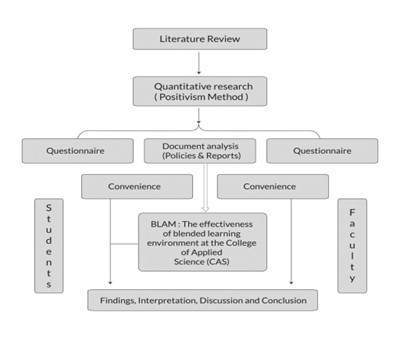
Convenience sampling is a non-probability sampling technique where samples are taken based on ease of access and availability.
Convenience sampling can be employed by researchers under conditions where probability of sampling is not possible due to time or financial limitations.
Strengths
- Cost-effective and fast
- Simple process
- Good for initial studies
Weaknesses
- Greater chances of sampling bias
- Generalization of results becomes difficult
- Less statistically valid
Example
A professor at a university surveys students present in his/her classroom during class hours [2].
Comparison of Sampling Methods for Data Analysis
| Sample Technique | Type of Sample | Cost | Efficiency | Complexity |
|---|---|---|---|---|
| Random Sample Technique | Probability | Moderate | High | Low |
| Systematic Sample Method | Probability | Low | High | Low |
| Stratified Sample Technique | Probability | Moderate | Very high | Moderate |
| Convenience Sample | Non-Probability | Very low | Low | Very low |
Choosing the Right Sampling Methods for Data Analysis
The selection of the best quantitative sampling techniques for data analysis depends on proper consideration of various elements.
Research Purposes
Various types of quantitative samples have specific purposes. Researchers need to choose a technique that suits the objective of their study [5].
Population Attributes
Size, diversity, and access to the population play a major role in determining sampling technique.
Budget Availability
Financial availability determines whether complex probability sampling techniques will be employed or not.
Time Factors
Time is always a factor that determines the use of sampling techniques.
Accuracy Requirement
Research studies needing accurate statistical data analysis require the use of probability-based sampling techniques.
With the above considerations in mind, researchers can be able to choose the best quantitative sampling techniques for their studies.
Challenges in Statistical Data Analysis and Sampling
While sampling provides many advantages, there are usually problems that arise during data collection and analysis.
These problems include:
- Bias in sampling
- Nonresponse error
- Lack of complete sampling frame
- Small samples
- Overrepresentation of some groups
It is important to solve these problems to ensure the credibility of data analysis.
Advantages of Professional Help with Increasing Precision in Sampling
Most scientists encounter difficulties choosing the right sampling techniques in quantitative research studies, particularly when working with massive samples or complicated designs [2].
Here are some ways professional statisticians may help in sampling precision:
- Designing sampling techniques
- Determination of the sample size
- Choosing methods for data analysis
- Modeling and interpretation of statistical results
- Reduction of errors in sampling
- Development of the research methodology
Professional advice will help researchers carry out better statistical data analysis.
Conclusion
Quantitative sampling methods play a very important role in determining success in conducting research and performing statistical data analysis. It is through adopting proper sampling methods that enable researchers to collect accurate data to conduct effective analysis that produces reliable results.
Some of the widely adopted methods include random sampling method in research, systematic sampling method, and stratified sampling method among others. All these methods have their own distinct benefits, and depending on what the researcher wants to accomplish, they adopt proper sampling methods [5].
Proper selection of sampling methods helps in achieving successful research outcomes. Effective sampling methods strengthen research validity and statistical data analysis.
Because of its proficiency in research methods based on quantitation and advanced analyses, Statswork facilitates successful research findings.
Reference:
- Rahman, M. M., Tabash, M. I., Salamzadeh, A., Abduli, S., & Rahaman, M. S. (2022). Sampling techniques (probability) for quantitative social science researchers: a conceptual guidelines with examples. Seeu Review, 17(1), 42-51. https://reference-global.com/download/article/10.2478/seeur-2022-0023.pdf
- Islam, M. A., & Aldaihani, F. M. F. (2022). Justification for adopting qualitative research method, research approaches, sampling strategy, sample size, interview method, saturation, and data analysis. Journal of International Business and Management, 5(1), 01-11. https://www.researchgate.net/profile/Md-Islam-394/publication/357352896_
- Hossan, D., Dato’Mansor, Z., & Jaharuddin, N. S. (2023). Research population and sampling in quantitative study. International Journal of Business and Technopreneurship (IJBT), 13(3), 209-222. https://ejournal.unimap.edu.my/index.php/ijbt/article/view/263
- Dehalwar, K. S. S. N., & Sharma, S. N. (2024). Exploring the distinctions between quantitative and qualitative research methods. Think India Journal, 27(1), 7-15. https://www.researchgate.net/profile/Kavita-Dehalwar/publication/377624694_
- Ahmad, M., & Wilkins, S. (2025). Purposive sampling in qualitative research: A framework for the entire journey. Quality & Quantity, 59(2), 1461-1479. https://link.springer.com/article/10.1007/s11135-024-02022-5