
- Services
- Data Analysis services
- Sample Work
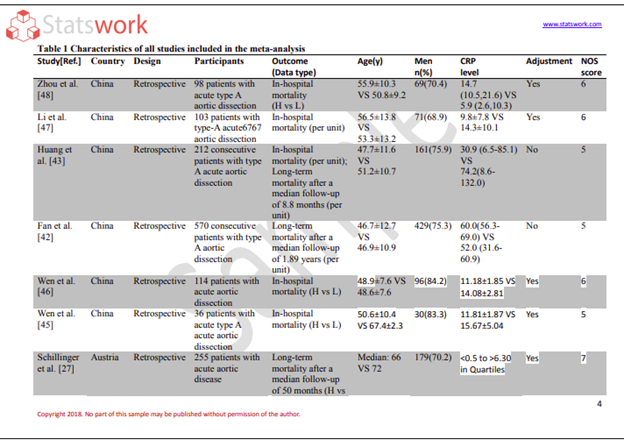
Data Analysis services
- Secondary Qualitative Research Services
- Secondary Quantitative Research Services
- Meta-Analysis Research services
- Sample Work
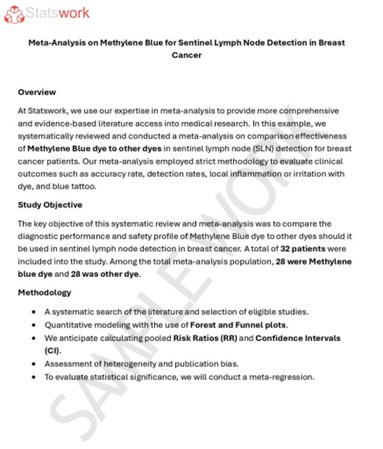
Meta-Analysis Research Services
- Data Collection Services
- Sample Work
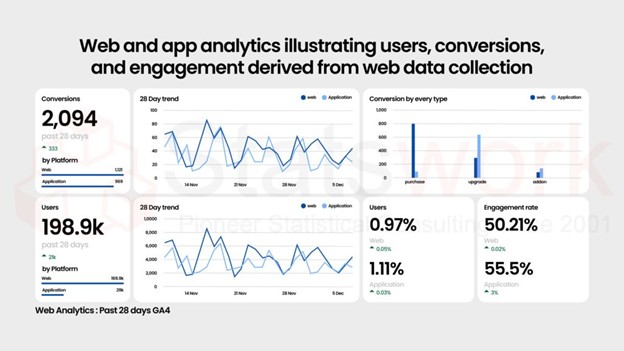
Data Collection Services
- Statistical & Biostatistics services
- Sample Work
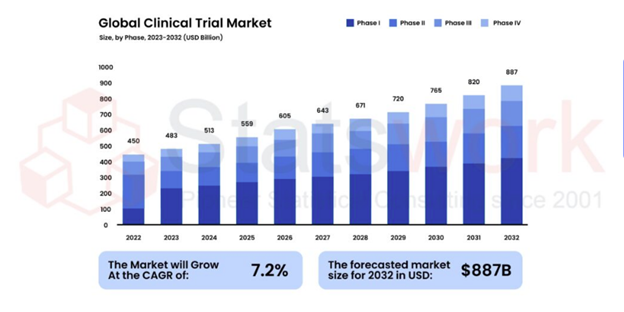
Statistical Programming & Biostatistics services
- Data Management Services
- Sample Work
Data Management Services
- Research methodology services
- Sample Work
Research methodology services
- Tool Development Services
- Sample Work
Tool development services
- Statistical Interpretation services
-
Statistical Interpretation services
- Sample Work
Statistical Interpretation services
-
- Sample Size Calculation Services
-
Sample Size Calculation Services
- Sample Work
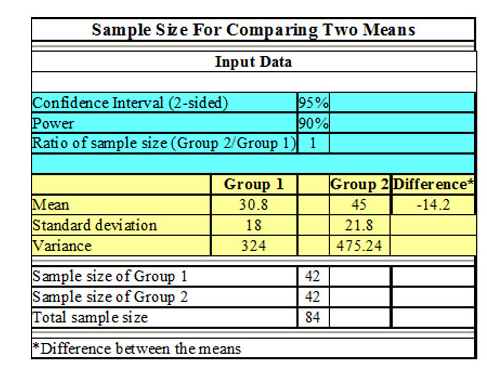
Sample Size Calculation Services
-
- AI & ML Services
-
Artificial Intelligence and Machine Learning Services
- Sample Work
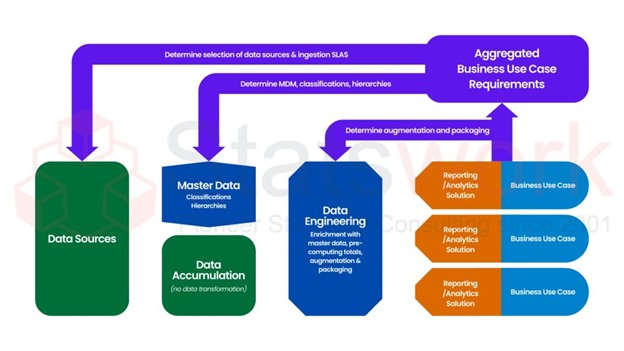
Artificial Intelligence and Machine Learning Services
-
- Meaningful Visualization Services
- Thought Leadership Services
- Report Generation Services
-
Report generation Service
- Sample Work
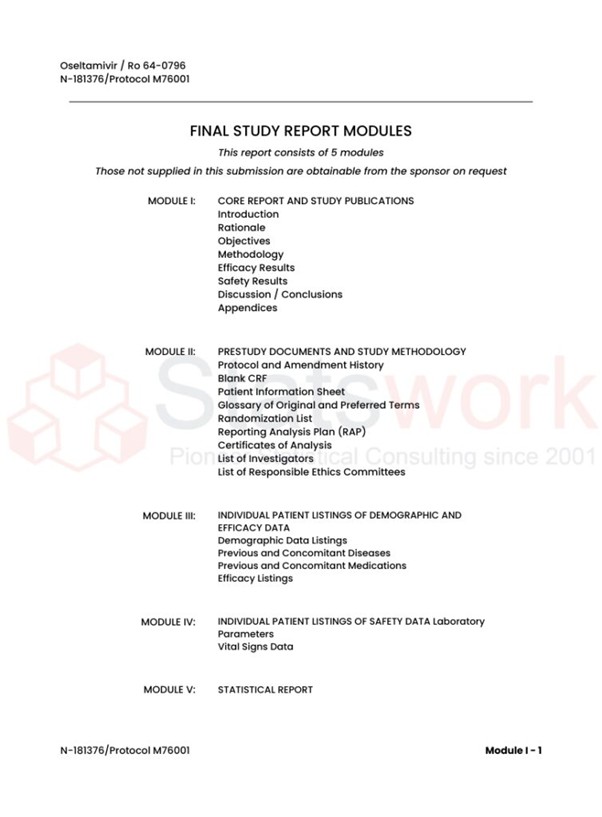
Report generation Services
-
- Data Analysis services
- Industries
- About Us
- Blog
- Insights
- Contact Us
- Services
- Data Analysis services
- Sample Work
Data Analysis services
- Secondary Qualitative Research Services
- Secondary Quantitative Research Services
- Meta-Analysis Research services
- Sample Work
Meta-Analysis Research Services
- Data Collection Services
- Sample Work
Data Collection Services
- Statistical & Biostatistics services
- Sample Work
Statistical Programming & Biostatistics services
- Data Management Services
- Sample Work
Data Management Services
- Research methodology services
- Sample Work
Research methodology services
- Tool Development Services
- Sample Work
Tool development services
- Statistical Interpretation services
-
Statistical Interpretation services
- Sample Work
Statistical Interpretation services
-
- Sample Size Calculation Services
-
Sample Size Calculation Services
- Sample Work
Sample Size Calculation Services
-
- AI & ML Services
-
Artificial Intelligence and Machine Learning Services
- Sample Work
Artificial Intelligence and Machine Learning Services
-
- Meaningful Visualization Services
- Thought Leadership Services
- Report Generation Services
-
Report generation Service
- Sample Work
Report generation Services
-
- Data Analysis services
- Industries
- About Us
- Blog
- Insights
- Contact Us
Choosing Between Manual and Automated Data Entry Services: A Complete Guide for B2B Companies
Qualitative Research Service
News & Trends
Recommended Reads
Contact us
Summary:
Both the manual data entry and automated data entry have their own strengths for B2B firms. The former is well-suited for complex, sensitive or small amounts of data entry, whereas the latter increases speed, accuracy and scalability with regards to huge quantities of structured data. Many organizations can reap the maximum benefits through a combination of automation and manual work. The choice between manual and automated data entry largely depends upon the amount, complexity, requirement of accuracy, budget and objectives of the organization. Statswork offers Data Entry Automation Services to B2B firms.
Data entry plays an important role in B2B enterprises today. Its importance comes from its impact on the performance speed of processes, compliance with regulations, and accuracy of each decision made [1]. Enterprises need to decide whether they will continue with manual data entry, switch to automated data entry, or combine both. This guide covers the key differences between these types of data entry to assist in choosing the best solution.
What Is Manual Data Entry?
Manually entering data is the process of transferring data from physical or electronic media to computer-based programs such as spreadsheets, CRMs or databases through a human operator [2]. Manual data entry continues to be applicable to companies dealing with low data volumes and specialized data entry.
| Pros of Manual Data Entry | Cons of Manual Data Entry |
| Good efficiency when working with ambiguous or complex source material. | Longer processing times, especially for large volumes of data. |
| High flexibility for handling unusual formats or one-time assignments. | Greater likelihood of errors due to human factors. |
| Low initial investment in equipment. | Labor costs increase significantly as data volume grows. |
| Human judgment is valuable for sensitive or context-specific data. | Difficult to scale without a proportional increase in staff. |
What Is Automated Data Entry?
The technology of data entry automation uses many techniques such as OCR, Robotic Process Automation, and artificial intelligence for data processing, with minimal involvement from humans [3]. This is an automated system that is meant to cater to those who prefer efficiency.
| Advantages of Data Entry Automation | Disadvantages of Data Entry Automation |
| Processes large volumes of data much faster than manual methods. | Higher initial setup and system integration costs. |
| Provides highly accurate and consistent results through systematic processing. | Less effective when handling highly unstructured or inconsistent data. |
| Reduces long-term operational costs despite higher upfront investment. | Requires ongoing maintenance and periodic human review. |
| Scales easily to meet growing business demands. |
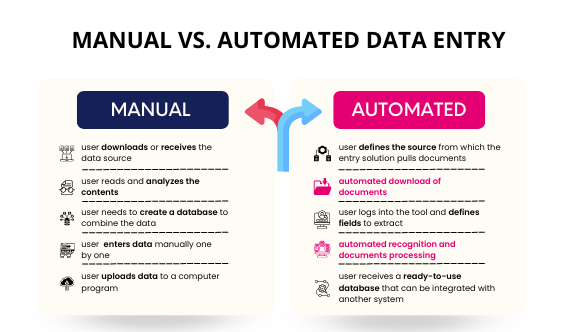
Manual vs Automated Data Entry: Side-by-Side Comparison
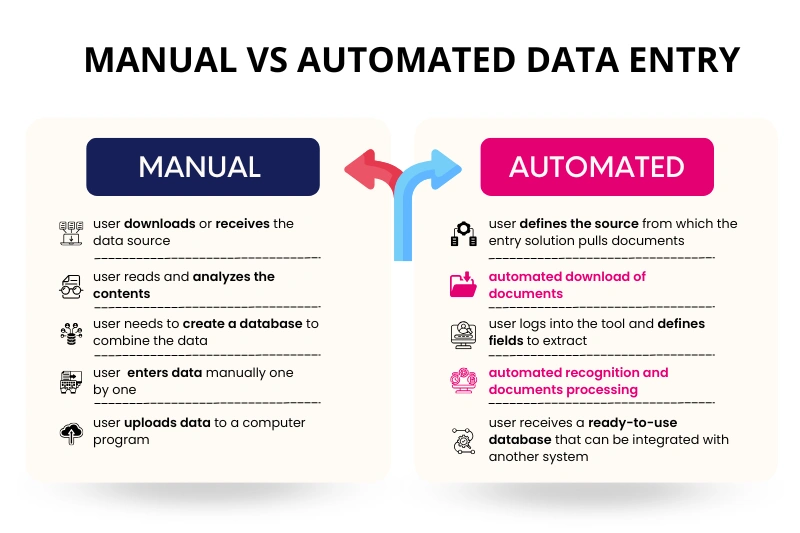
| Factor | Manual Data Entry | Automated Data Entry |
| Speed | Slower, dependent on employee ability | Faster, designed for high-volume processing |
| Accuracy | Excellent for complex or qualitative data | Excellent for quantitative and structured data |
| Setup Costs | Low | Medium to high |
| Cost in Long Term | Increases as data volume grows | Decreases as data volume grows |
| Scalability | Limited due to staffing constraints | Readily scalable |
| Suitable For | Small, volatile, or sensitive datasets | Large volumes of recurring, structured data |
Key Considerations for B2B Decision-Makers
Considerations in deciding on whether to opt for automated data entry or manual one includes:
- The amount of data: A large amount of regular data would be suited for automated entry whereas small, irregular amounts would be suitable for manual entry.
- The data complexity: Forms and invoices are best for automated data entry while complex and inconsistent documents would still require manual review [3].
- The accuracy needs: In regulated industries such as finance, health care, and legal, manual or semi-manual verification is necessary alongside the use of automated tools.
- Funding considerations: Manual data entry gives fast results and involves lower costs initially whereas automation brings higher returns in the long run.
Why a Hybrid Approach Often Wins
This is not always a question that organizations must face. It would be optimal for a company to use both approaches in one solution, automating most processes and having a manual check when something goes wrong [2].
Conclusion
Each of these types of data entry performs its unique function in business-to-business processes. Manual data entry has its importance in those areas where judgment and context are vital, whereas the automated data entry works best in highly repetitive tasks of large volume and structured nature [5]. It all depends on the level of complexity of your data, your requirements concerning their precision, budget and prospects, and many businesses choose the hybrid way to succeed.
Statswork offers its Data Entry Automation Services that will assist you in making the right combination of manual precision and automated efficiency to decrease mistakes, save your time and grow data entry operations without hiring more employees. If you want to know more about the services offered by Statswork, please contact us!
Frequently asked question:
Manual data entry relies on human operators to input information, making it suitable for small or complex datasets, while automated data entry uses technologies such as OCR and AI to process large volumes of structured data quickly, accurately, and efficiently.
AI cannot perform manual data entry in the traditional sense, but it can automate data extraction, classification, and entry from documents, reducing human effort while improving speed and accuracy.
Manual business processes depend on human intervention and are generally slower and more prone to errors, whereas automated processes use software and intelligent technologies to execute repetitive tasks consistently, efficiently, and with minimal manual involvement.
Manual data entry requires users to type information into systems, while automated data capture devices such as barcode scanners, OCR software, and RFID readers collect and transfer data directly, minimizing errors and increasing productivity.
The three common types of data entry are manual data entry, automated data entry using OCR or AI technologies, and semi-automated data entry, which combines automation with human verification for improved accuracy.
Manual methods require human effort to complete tasks, while automated methods use software, machines, or AI to perform tasks faster, more accurately, and with minimal human intervention.
Reference
- Shishodia, A., Bhattacharya, P., Gunasekaran, A., & Sundarakani, B. (2026). A review on multi-perspective analysis of data science tools across business verticals. Journal of Enterprise Information Management, 1-37. https://www.emerald.com/jeim/article
- Njuguna, E., Daum, T., Birner, R., & Mburu, J. (2025). Silicon Savannah and smallholder farming: How can digitalization contribute to sustainable agricultural transformation in Africa?. Agricultural Systems, 222, 104180. https://www.sciencedirect.com/science
- BAJPAI, S. (2024). Technological advancements shaping market entry strategies in the non-automatic weighing instrument sector: Balancing customer needs and competitive dynamics in Belgium. https://unitesi.unimore.it/handle/20
- Andersson, S., Aagerup, U., Svensson, L., & Eriksson, S. (2024). Challenges and opportunities in the digitalization of the B2B customer journey. Journal of business & industrial marketing, 39(13), 160-174. https://www.emerald.com/jbim/article
- Bentalha, B. (2025). Artificial Intelligence in B2B Sales: A Survey of Current Applications and Future Trends. AI, Economic Perspectives, and Firm Business Management, 143-164. https://www.igi-global.com/chapter/artificial-intelligence-in-b2b-sales/372747