
- Services
- Data Analysis services
- Sample Work
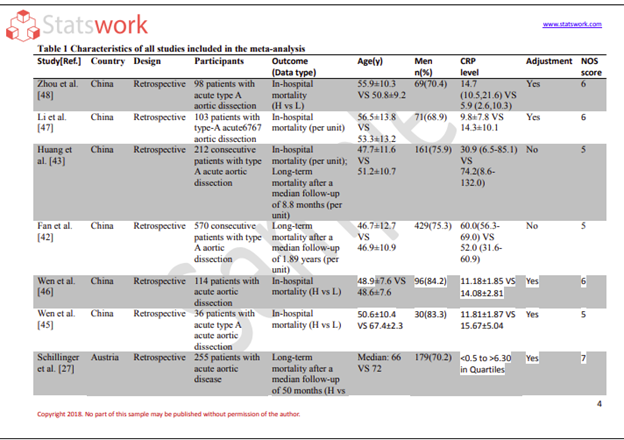
Data Analysis services
- Secondary Qualitative Research Services
- Secondary Quantitative Research Services
- Meta-Analysis Research services
- Sample Work
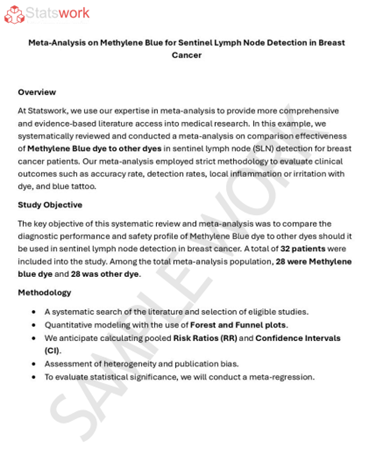
Meta-Analysis Research Services
- Data Collection Services
- Sample Work
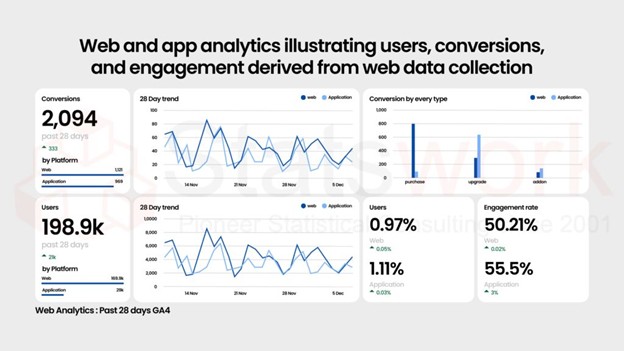
Data Collection Services
- Statistical & Biostatistics services
- Sample Work
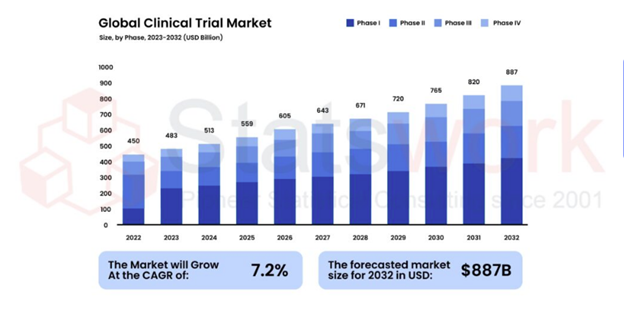
Statistical Programming & Biostatistics services
- Data Management Services
- Sample Work
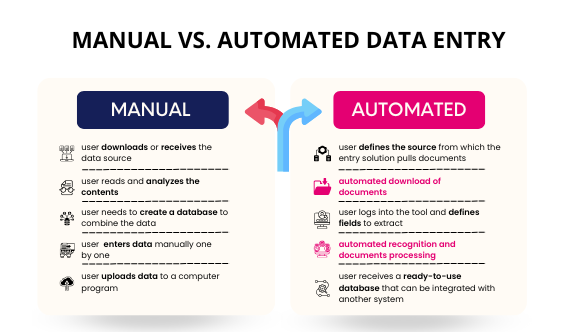
Data Management Services
- Research methodology services
- Sample Work
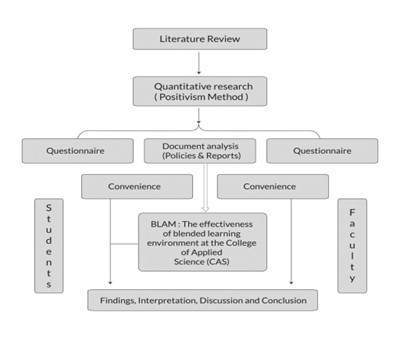
Research methodology services
- Tool Development Services
- Sample Work
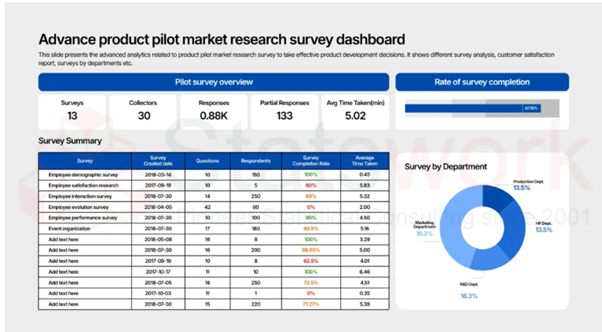
Tool development services
- Statistical Interpretation services
-
Statistical Interpretation services
- Sample Work
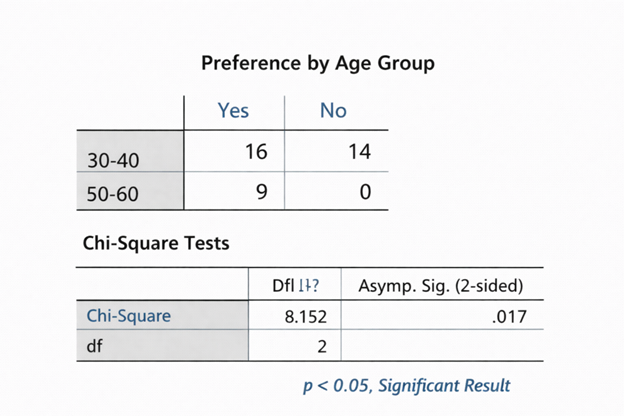
Statistical Interpretation services
-
- Sample Size Calculation Services
-
Sample Size Calculation Services
- Sample Work
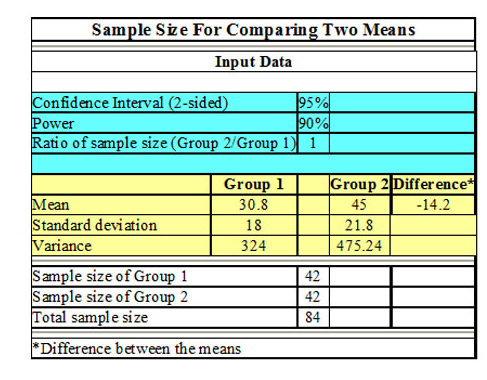
Sample Size Calculation Services
-
- AI & ML Services
-
Artificial Intelligence and Machine Learning Services
- Sample Work
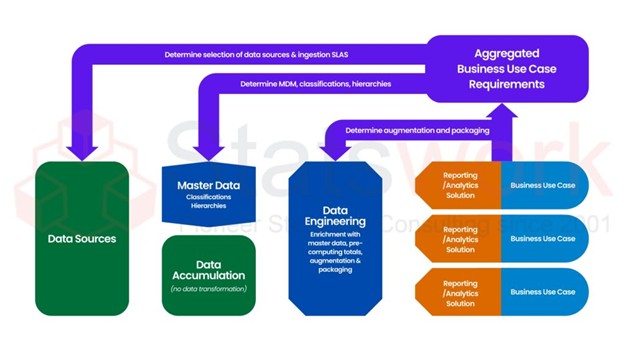
Artificial Intelligence and Machine Learning Services
-
- Meaningful Visualization Services
- Thought Leadership Services
- Report Generation Services
-
Report generation Service
- Sample Work
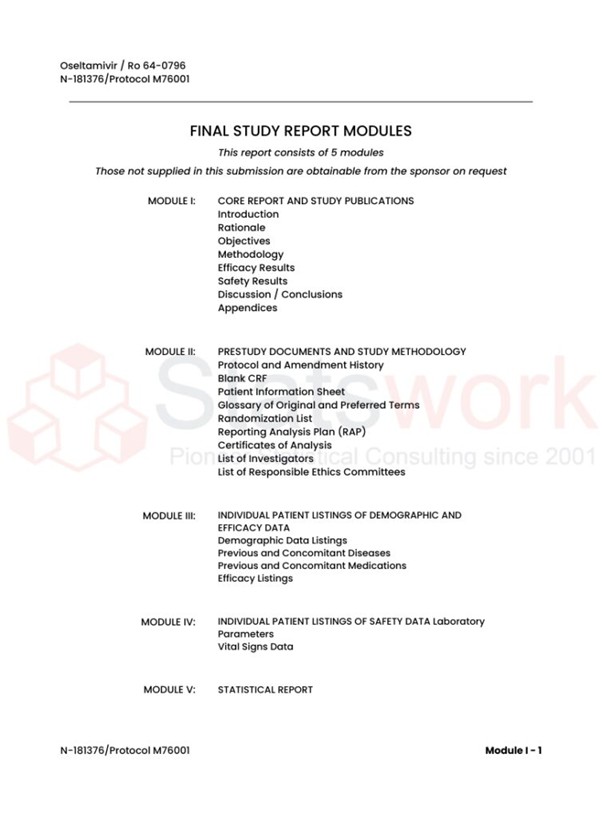
Report generation Services
-
- Data Analysis services
- Industries
- About Us
- Blog
- Insights
- Contact Us
- Services
- Data Analysis services
- Sample Work
Data Analysis services
- Secondary Qualitative Research Services
- Secondary Quantitative Research Services
- Meta-Analysis Research services
- Sample Work
Meta-Analysis Research Services
- Data Collection Services
- Sample Work
Data Collection Services
- Statistical & Biostatistics services
- Sample Work
Statistical Programming & Biostatistics services
- Data Management Services
- Sample Work
Data Management Services
- Research methodology services
- Sample Work
Research methodology services
- Tool Development Services
- Sample Work
Tool development services
- Statistical Interpretation services
-
Statistical Interpretation services
- Sample Work
Statistical Interpretation services
-
- Sample Size Calculation Services
-
Sample Size Calculation Services
- Sample Work
Sample Size Calculation Services
-
- AI & ML Services
-
Artificial Intelligence and Machine Learning Services
- Sample Work
Artificial Intelligence and Machine Learning Services
-
- Meaningful Visualization Services
- Thought Leadership Services
- Report Generation Services
-
Report generation Service
- Sample Work
Report generation Services
-
- Data Analysis services
- Industries
- About Us
- Blog
- Insights
- Contact Us
Financial Secondary Data Collection for Valuation, Risk Analysis & Strategy
Real-World Evidence
News & Trends
Recommended Reads
Contact us
Fast Facts:
B2B financial data gathering involves collecting financial data that already exists by way of financial data statements, disclosures, exchanges, financial data markets, and industry financial data reports rather than conducting primary research. This technique is used to achieve three essential objectives; first, valuation where financial data is used to benchmark the value of the business relative to its competitors. The second objective is risk assessment that involves assessing market risk, credit risk, and operational risk through data collected in the past and that of peers. The third is capital funding strategy based on validated financial data. Financial data is faster and cheaper than primary research but will yield accurate data only when the financial data is validated and triangulated finance data.Introduction
No valuation, no risk model, and no funding strategy is more valuable than the data that goes into it. Financial secondary data acquisition allows the company to have access to already existing financial data and analysis acquired from a number of secondary financial data sources – all at a much lower cost than would be necessary to conduct financial primary research.
Using external financial data and corporate financial benchmarking, an organization will be able to compare itself to other businesses and determine the real value of the company. This guide explains what financial data is used in the business valuation, enterprise financial risk analysis, and funding strategy, and where to get your business valuation data sources [1].
The Role of Financial Secondary Data in Valuation
Secondary data analysis of financials is useful in valuation because it offers an outside perspective which cannot be offered by any of the internal company data. When coupled with fund strategy analytics, it allows for more confidence in assessing the potential of growth and positioning of the company than what would have been achieved using internal data only. Financial databases, government financial data, and DCF data sources are often used for market valuation by companies [2].
| Valuation Function | Indications Provided |
| Financial performance appraisal | Trends in revenue, profitability, and robustness of cash flows |
| Business stability analysis | Sustainability and shock resistance in the long run |
| Establishment of market value | Value of the enterprise in comparison with peers |
| Competitive benchmarking | Business performance compared to other players in the industry |
| Comparable company valuation | Multiples of valuation derived from comparable and valued companies |
| Insights into growth and expansion | Market opportunities backed up by trends in the external environment |
| Evaluation of risk and uncertainty | Risk exposure considering financial trends in the industry |
| Regulatory benchmarks | Reporting accuracy requirements |
Resolute valuation models must use accurate data including business valuation data, enterprise value benchmarking, and comparable valuation data. The valuation outsourced service is widely used by various businesses for unbiased valuation [3].
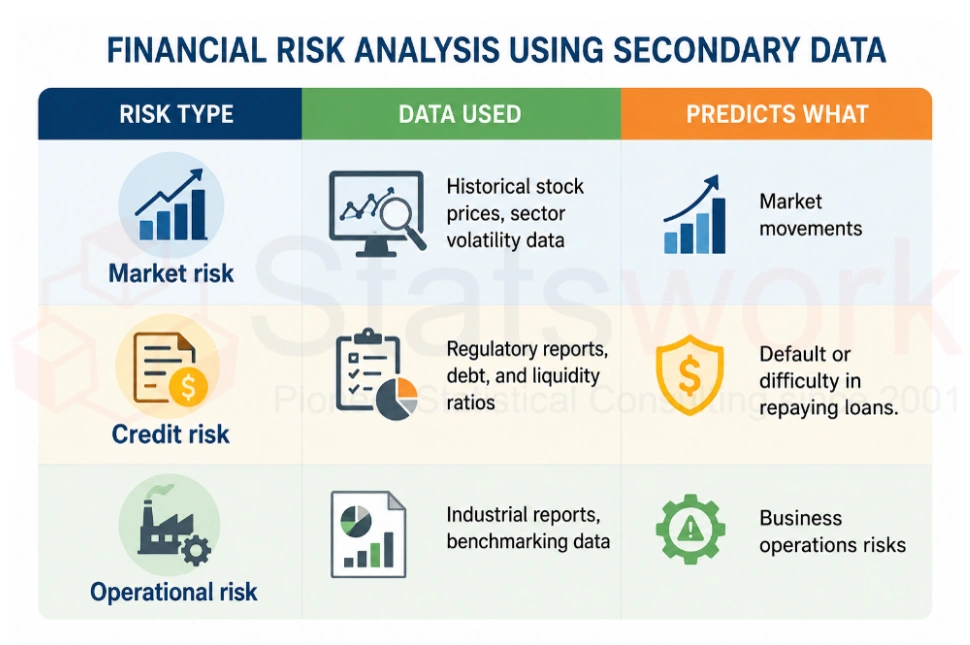
Financial Secondary Data for Risk Analysis
| Risk Type | Data Used | Predicts What |
| Market risk | Historical stock prices, sector volatility data | Market movements |
| Operational risk | Industrial reports, benchmarking data | Business operations risks |
This can be made possible through secondary data collection where existing financial data is utilized and not creation of new data, thereby keeping the corporate risk assessment process fast and cost effective.
Practical Applications
Financial secondary data supports decision-making in several concrete ways:
- Competitive risk assessment – by benchmarking the financial ratios of a company with its industry or market will determine how effectively it can maintain liquidity under changing circumstances through industry benchmarking and peer benchmarking.
- Modeling default risk – secondary sources help in predictive analysis and trend analysis with the use of b2b credit risk data, alternative data for credit risk and financial optimization portfolios [3].
- Increased forecasting accuracy – cross-referencing various sources of data, such as public web financial data, proprietary data finance and external data sources finance enhances financial forecasting.
Enhancing Funding Strategies with Financial Data Insights
The use of external financial data through its aggregation helps in providing different avenues for funding since it helps in optimizing costs, allocating capital, and making investments at the right time.
| Technique | How It Works |
| Financial Data Aggregation | Gathers information from both public and private sectors to help with capital allocation without conducting additional research |
| Valuation Data Extraction | Based on past financial statements and economic factors to estimate risk-adjusted return on investment |
| Financial Benchmarking | Conducts a comparison between internal performance measurements and industry benchmarks for benchmarking of capital structure |
More organizations are using business-to-business funding intelligence, capital allocation information, and investment timing information to make effective funding decisions that maximize growth opportunities [2].
Financial Benchmarking and Secondary Data Analysis
| Components | Description |
| Financial Benchmarking Models | Capable of comparing the financial performance of an organization vis-a-vis other competitors within the industry. |
| Secondary Data Collection | Less expensive and less time-consuming than creating independent primary information |
| Financial and Valuation Data | The identification of the common financials among similar organizations to aid in decision-making |
Organizations can recognize gaps and areas where improvements can be made through financial key performance indicators benchmarking, peer benchmarking analysis, and benchmarking services of financial professionals. This is usually accomplished via business intelligence secondary research and secondary market research financial services [5].
Financial Benchmarking and Secondary Data Analysis
Secondary sources for reliable financial information are obtainable from government departments, business directories, market research firms, and financial databases.
| Data Source | Source Type | Strategic Insight Delivered |
| Public financial statements | Income, profits, cash flows, debt | Benchmarking and Valuation Analysis |
| Regulatory documents | Filing data, audit data, shareholding data | Risk Assessment & Due Diligence |
| Industry and trade magazines | Trends in the market, average of the industry, Cost structure information | Competitor Benchmarking & Funding Strategy |
| Stock markets | Historical stock price data, market capitalization, dividends. | Investor insights, valuation trends |
| Commercial databases | Financial figures, ratios, M&A activity | Competitor Benchmarking & Valuation Analysis |
| Government and central bank databases | Macroeconomic data, policy impacts | Strategic Funding & Financial Forecasting |
Alternative data credit risk, B2B intent data financial, and other innovative data streams are also considered by many companies in addition to traditional financial analysis [2].
Conclusion
Financial secondary data brings together disparate information from the public domain and industries into a coherent framework for the purposes of valuation, risk assessment, and financing strategies. When done right, it helps companies access an external data set that would otherwise be impossible to achieve with internal information alone — thus providing better forecasts, stronger investor presentations, and sounder financial decision-making [5]. In terms of enterprise financial risk analysis, business valuation using financial data, and corporate financial benchmarking, the need for trusted secondary data sets is greater than ever.
In Our statswork , Financial Secondary Data Analysis Services and our Secondary Quantitative Data Collection Services help companies collect and organize financial data from reputable secondary sources, such as public filings, market databases, industry reports, and other sources of secondary financial data. Using our knowledge of secondary financial data sources, comparable company analysis data sources, portfolio risk management data sources, alternative data sources for credit risk, and business intelligence secondary research, we can help you make better informed decisions.
Frequently asked questions:
Secondary methods of data collection involve gathering information that has already been collected and published by other sources. These methods include public financial statements, government reports, industry publications, financial databases, and academic research. They provide a cost-effective and time-efficient way to obtain relevant data for analysis and decision-making.
Secondary data evaluation is the process of assessing existing data for its accuracy, reliability, relevance, and timeliness. Researchers review the source, methodology, and quality of the information before using it. This helps ensure that decisions and analyses are based on trustworthy data.
Financial data can be collected from public financial statements, regulatory filings, stock market reports, government databases, and industry publications. The collected information should be verified and compared across multiple sources for accuracy. Proper organization and analysis of the data help support business valuation, risk assessment, and strategic planning.
Primary data in finance is collected directly by the researcher through methods such as surveys, interviews, or audits for a specific purpose. Secondary data refers to financial information that has already been collected and published by external sources. Examples include annual reports, financial databases, and government economic statistics.
Examples of primary data include surveys, interviews, focus groups, observations, and internal audits. Examples of secondary data include annual reports, government statistics, industry reports, financial databases, and stock market records. Both types of data are valuable for financial research and business analysis.
The four primary financial statements are the Income Statement, Balance Sheet, Cash Flow Statement, and Statement of Changes in Equity. Together, they provide a complete picture of a company’s financial performance, position, and cash movements. These statements are essential for valuation, investment decisions, and financial risk analysis.
References
- Cornwell, N., Bilson, C., Gepp, A., Stern, S., & Vanstone, B. J. (2023). The role of data analytics within operational risk management: A systematic review from the financial services and energy sectors. Journal of the Operational Research Society, 74(1), 374-402. https://www.tandfonline.com/doi/full/10.1080/01605682.2022.2041373
- Radanliev, P. (2024). The rise and fall of cryptocurrencies: defining the economic and social values of blockchain technologies, assessing the opportunities, and defining the financial and cybersecurity risks of the Metaverse. Financial Innovation, 10(1), 1. https://link.springer.com/article/10.1186/s40854-023-00537-8
- Ewim, D. R. E., Orikpete, O. F., Scott, T. O., Onyebuchi, C. N., Onukogu, A. O., Uzougbo, C. G., & Onunka, C. (2023). Survey of wastewater issues due to oil spills and pollution in the Niger Delta area of Nigeria: a secondary data analysis. Bulletin of the National Research Centre, 47(1), 116. https://link.springer.com/article/10.1186/s42269-023-01090-1
- Ridzuan, N. N., Masri, M., Anshari, M., Fitriyani, N. L., & Syafrudin, M. (2024). AI in the financial sector: The line between innovation, regulation and ethical responsibility. Information, 15(8), 432. https://www.mdpi.com/2078-2489/15/8/432
- Ramadugu, R., & Doddipatla, L. (2022). Emerging trends in fintech: How technology is reshaping the global financial landscape. Journal of Computational Innovation, 2(1). https://researchworkx.com/index.php/jci/article/view/52