

How data collection tools turns out to be a game-changer in business analysis? List some of the data collection software used in business research?
December 15, 2020
How Can Questionnaires Differ Based on Distribution, and What Are the Advantages of Using a Questionnaire in Market Research?
December 21, 2020What is the importance's of data collection in different areas? Mention some tools used in data collection.
Meta Analysis Service
Recommended Reads
Contact us
Summary:
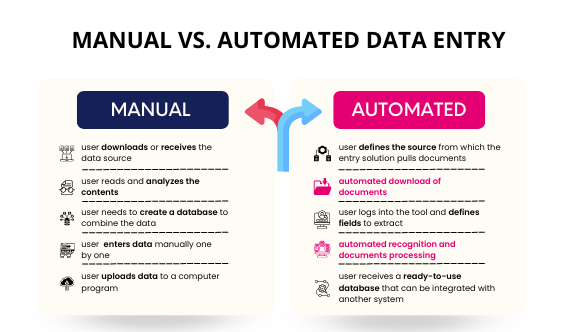
Data collection that is effective allows organizations to make business decisions since information gathered through reliable means can be translated into business intelligence. The use of both primary and secondary sources together with qualitative and quantitative approaches is what makes an organization capable of conducting accurate analysis. Business to business data collection services provide such benefits for businesses.
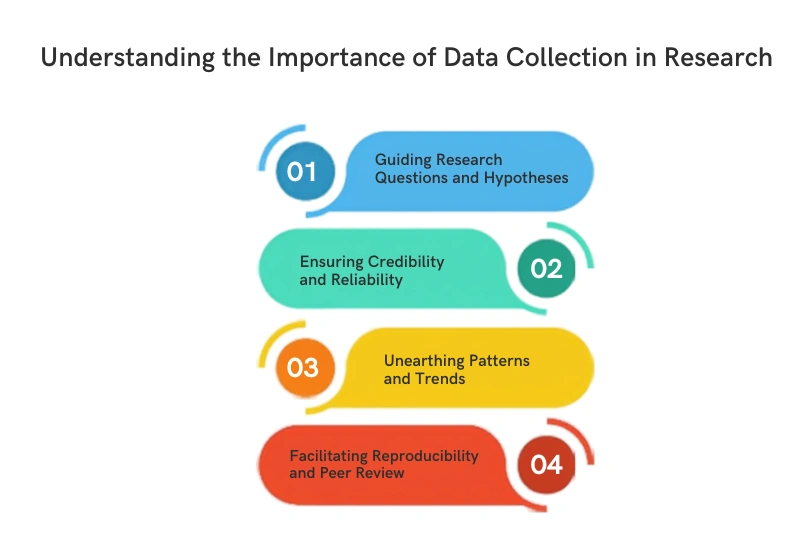
Any sound business decision must start with credible data. It may concern the company’s customers, the competitors’ performance, or even training some machine learning algorithms; yet the process is the same and involves collecting business data, its verification, and making it usable [1]. For B2B businesses, however, such approach has been evolving from a secondary task to a primary strategy – companies which systematically collect their customer feedback and survey data make more informed and timely decisions than those basing everything upon their assumptions.
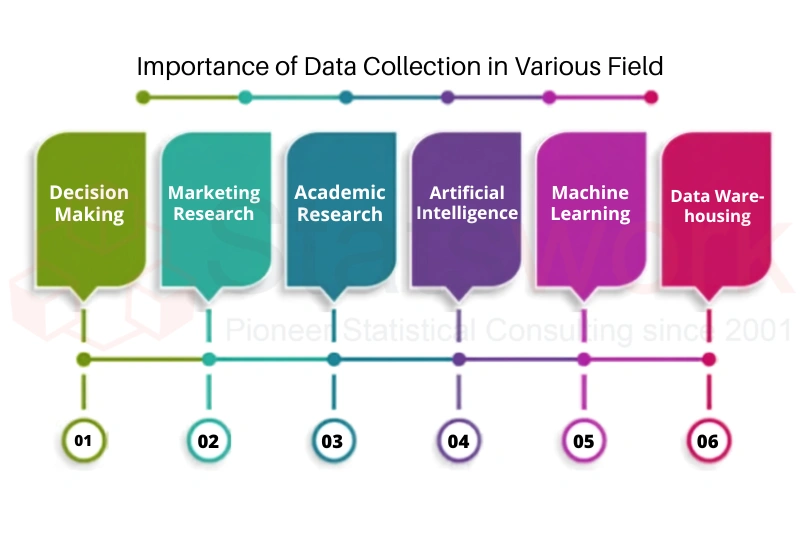
Why Data Collection Matters Across Business Functions
Market research and competitive positioning. Firms that engage in systematic market research data gathering processes get an enhanced understanding of customer requirements, price sensitivity, and unsatisfied needs. That way, competitive data analysis and trend analysis data become possible for leaders to identify changes ahead of their rivals.
Business intelligence and strategy. Contemporary BI departments operate on the foundation of good, clean inputs. Business teams that can structure their business data correctly will produce business intelligence and market research insights that guide product road maps, pricing strategies, and expansion efforts [2].
Customer experience and sales. Large companies leverage data collected to produce customer data insights and enable sales data analysis to find out about at-risk accounts, highly profitable customer segments, and revenue generation opportunities through customer behavior analysis.
Artificial Intelligence, machine learning, and automation. Training data is the lifeblood of any AI project. Companies that can automate their data gathering processes and have good data hygiene are much better off implementing machine learning solutions that actually work in production than those built on bad data [3].
Data security, compliance, and analysis. When it comes to highly regulated or research-intensive industries like healthcare, finance, and the life sciences, data gathering helps provide support for everything from clinical dissertations to compliance reports. In such an environment, enterprise data security and data validation are not luxuries, but essentials.
Performance measurement. Data collection and monitoring performance against industry data standards will enable management to assess their progress in an objective manner, without anecdotes [4].
Primary and Secondary Data: The Two Foundations
The techniques used in data collection usually fall into two broad types:
- The primary type is where data is collected first-hand from surveys, interviews, focus groups, or observation. It is the best technique for responding to a particular business query, although it is more costly and time-consuming.
- The secondary type is where the information is derived from an external source like industry report, governmental agency, or previous study. This method is less costly and quick but calls for validated research data before it can be relied on [3].
Most research programs within enterprises use both approaches.
Qualitative vs. Quantitative Collection
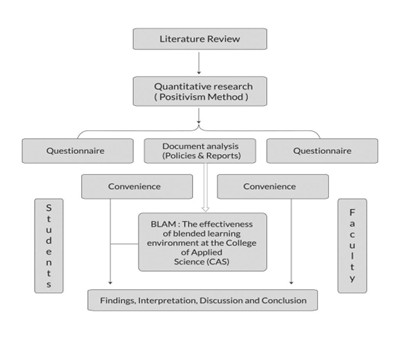
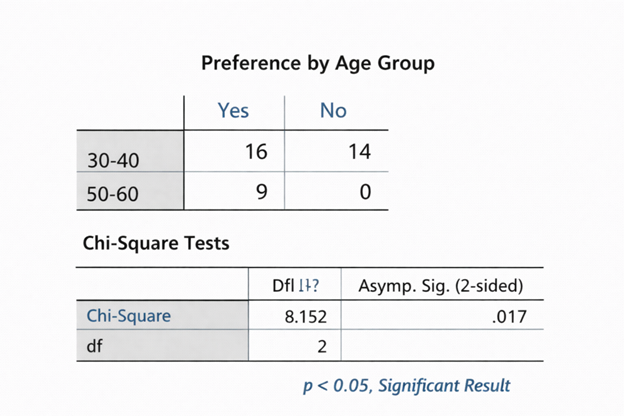
Quantitative methods (structured surveys, polls, transactional logs) produce numerical data suited to statistical analysis and pattern detection. Qualitative methods (interviews, open-ended feedback, case studies) capture context and motivation that numbers alone miss. A mature research program uses both to streamline research process work and avoid one-dimensional conclusions.
Tools Used in Data Collection
Here are some of the software or tools for data collection:
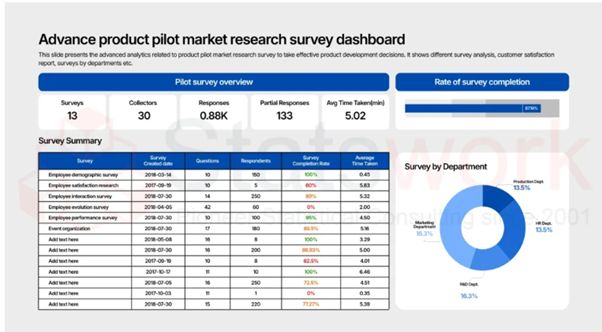
- Survey and Feedback Tool – This includes tools such as Qualtrics, Survey Monkey and Typeform.
- CRM & Sales Tool – For a centralized customer data management solution, one can use Salesforce and Hubspot.
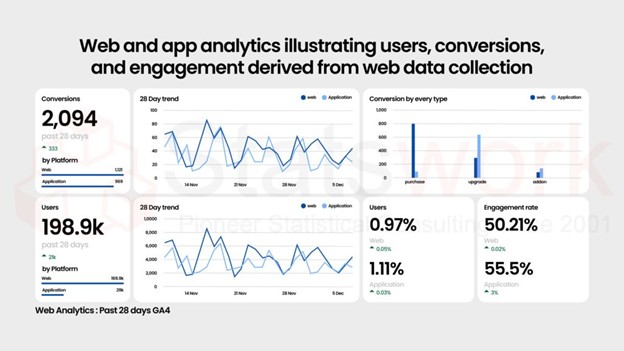
- Web and Product Analytics – Behavioral analytics tools that can be considered here are Google Analytics and Mixpanel.
- Data Mining and Extraction Tool – Good automated data collection process tools that can be considered are Talend and KNIME.
- Data Warehousing and Business Intelligence Tool – Good tools for this category include Snowflake and Power BI.
- AI/ML Data Pipeline Tool – Tools to manage annotation, labeling and validation of unbiased training data [2].
It will all depend on the research question and budget considerations.
Conclusion
Collection of data is no longer an auxiliary activity. Organizations that increase the quality of collected data save time on correction in future and can work with data in a much more productive manner. Those enterprises that view data collection as a strategic process will be always ahead of the competition: those organizations will be the first to notice the shifts on the market and respond to their customers in a timely fashion, creating robust AI applications.
For organizations that lack an internal structure for doing research, the services for business-to-business research and outsourcing of corporate research will be very beneficial [4].
Should you decide to boost the efficiency of data gathering and analysis in your organization, our experts can help you with a range of corporate data gathering solutions for enterprises of all sizes and industries – from survey creation to report creation.
Turn your business data into a competitive advantage with professional data collection solutions. Contact Statswork today for expert support in survey design, data collection, validation, analysis, and business intelligence tailored to your organization’s needs.
Frequently Asked Questions (FAQs)
Common data collection tools include survey platforms such as Qualtrics, SurveyMonkey, and Typeform, CRM systems like Salesforce and HubSpot, web analytics tools such as Google Analytics and Mixpanel, data extraction tools like Talend and KNIME, and business intelligence platforms such as Power BI.
Data collection is important because it provides accurate and reliable information that supports informed decision-making, improves business strategies, enhances customer insights, and drives research and innovation.
A data collection tool is a software application, questionnaire, survey, interview guide, or digital platform used to gather, organize, and manage information for research, business analysis, or decision-making.
Data collection is the systematic process of gathering, measuring, and recording information from various sources to answer research questions, support business decisions, and generate meaningful insights.
The four main types of data collection are surveys, interviews, observations, and document or record reviews, each serving different research and business objectives.
Five common ways to collect data are conducting surveys, interviews, focus groups, direct observations, and reviewing existing records or secondary data sources.
References:
- Ruijer, E., Porumbescu, G., Porter, R., & Piotrowski, S. (2023). Social equity in the data era: A systematic literature review of data‐driven public service research.Public Administration Review, 83(2), 316-332. https://onlinelibrary.wiley.com/doi
- Gebre, E. (2022). Conceptions and perspectives of data literacy in secondary education. British Journal of Educational Technology, 53(5), 1080-1095. https://bera-journals.onlinelibrary.wiley.com/doi/ab
- Mattar, J., Ramos, D. K., & Lucas, M. R. (2022). DigComp-based digital competence assessment tools: Literature review and instrument analysis. Education and Information Technologies, 27(8), 10843-10867. https://link.springer.com/article/10.10
- Jahani, H., Jain, R., & Ivanov, D. (2026). Data science and big data analytics: a systematic review of methodologies used in the supply chain and logistics research. Annals of Operations Research, 359(2), 1297-1354. https://link.springer.com/article/10


