statswork

Revolutionizing Healthcare with Image Classification: Making Sense of Visual Data

Revolutionizing Healthcare with Image Classification: Making Sense of Visual Data

Introduction

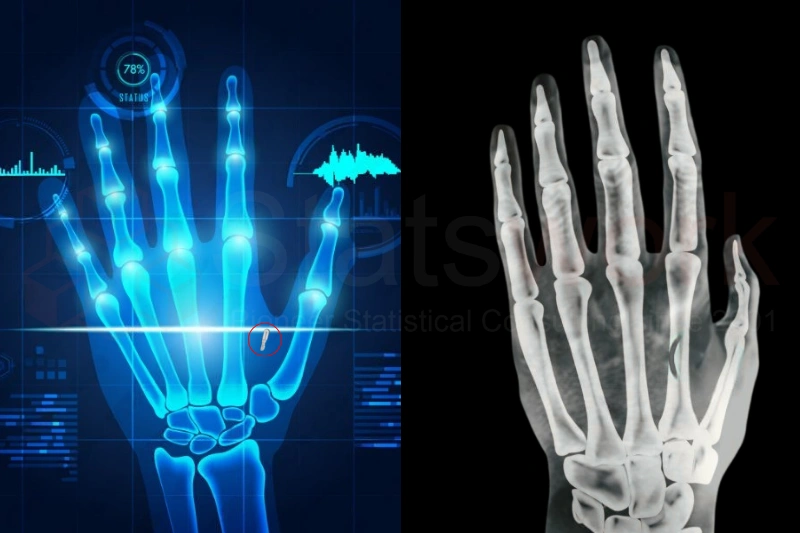
The healthcare system is experiencing rapid reform, with artificial intelligence (AI) leading the charge. One of the most prominent developments in healthcare includes image classification in medical diagnostics. Image classification utilizes machine learning algorithms to interpret medical images, such as X-rays, MRIs, and CT-scans. Image classification appears to have considerable improvements over human interpretation in accuracy, speed, and cost of diagnosis. In this paper, we examine how image classification uses artificial intelligence in healthcare, its benefits and drawbacks, and the laying groundwork for its future application.[1]

What is Image Classification and Why is it Important in Healthcare?

Image classification is an application of artificial intelligence where a machine learning model is used to analyse and classify image data, in the case of healthcare images, it’s applied to reviewing medical images to identify unique characteristics or abnormalities that may indicate a specific disease or illness.

What is the Importance?

Early Identification: Image classification tools can identify conditions at an earlier point in the care continuum, leading to faster allocation of treatment.

Greater Accuracy: Even though the possibility of error with the human eye can apply, AI-assisted modalities may pick up on the subtler characteristics that the human eye may not capture.

Cost-Protecting: Automating the analysis of medical images will ultimately save an extensive amount of time and resources by reading prior to manual interpretation, thus, resulting in a faster treatment plan.

Specific case: Breast Cancer Screening: AI-enhanced mammography devices can identify early signs of breast cancer through the identification of small tumours or tumours that may be hard to when evaluating (especially) X-ray images sometimes before human radiologist.

How Does Image Classification Work in Medical Applications?

The typical process of image classification consists of training machine learning models using large numbers of labelled medical images, after which the model can classify images, it has never seen before. See how this works.

  1. Data Collection: Medical images (e.g. x-rays, CT scans, MRIs) will be collected from patients by healthcare providers as part of healthcare data collection Services. These medical images will have some form of diagnostic label (e.g. “tumour,” “no tumor”).
  2. Model Training: The labelled patient images can then be used to train the AI model (most commonly, a convolutional neural network, or CNN) to learn the patterns associated with specific clinical conditions.[3]
  3. Testing and Validation: The model is then tested on a new set of images the model has not seen to test the model’s ability to generalize.
  4. Deployment: Once the model is verified, the model will be part of the healthcare system to help radiologists/physicians to assess new medical images.

Stroke Identification: A computer AI trained to evaluate thousands of CT scan images can identify subtle differences in brain tissue to identify precursory signs of a stroke and facilitate a faster response by the medical team.

AI in healthcare

How Does Image Classification Improve Diagnosis?

Benefit What it provides
Speed diagnosis AI allows reading images in seconds, speeding up prognosis.
More accurate AI can detect subtle abnormal features that the human eye may miss.
Decision support AI provides clinicians with information and assists in clinical decision-making.
Optimized resource usage AI reduces the number of images needing human review, allowing clinicians to focus on complex cases.
Early detection and intervention AI can detect conditions earlier and support timely intervention for better outcomes.

Obstacle that Exists to Utilizing Image Classification?

Privacy and Security Matter: Respect patients’ privacy.

Data Quality: Variation in data quality can involves implementation off the AI due to poor data.

Trust in AI: Clinician trust in AI suggests increased likelihood of AI users and decisions from AI.

Regulation: Approval and understanding of governing agency for AI tools can deter and slow implementation.

Example: When a health data storage breached was publicized in a 2020 article, the importance of instituting different images classification process related to safety security could be reconsidered.

What Are AI's Effects on Various Medical Specialties?

Specialty Use Case Effect
Radiology Tumour/Fracture Detection Used to identify tumours/fractures faster and reduce the burden on radiologists.
Neurology Stroke Detection Facilitates fast identification of cerebral abnormalities, enabling quicker intervention.
Oncology Cancer Detection Enables earlier detection of cancerous masses compared to traditional imaging methods.
Orthopaedics Fracture Detection Reduces the time needed to identify bone fractures.
Cardiology Heart Disease Detection Enhances early diagnosis of heart diseases using medical imaging.

What Will the Future of AI Look Like for Medical Imaging?

  • Personalized Medicine: AI may develop customized treatments based on imaging and genetic data.
  • Collaboration: AI will assist doctors, not take their place, by providing real-time insights from data.
  • Increased Access: AI tools may allow health care to reach rural or underserved locations.
  • Ongoing Learning: AI systems will learn to get smarter as we collect more data and “learn” from their experience.

Conclusion

AI is transforming medical imaging and Clinical Data Collection. It provides faster accurate diagnoses to improve patient outcomes and cut costs. Still, issues persist around data privacy, trust in AI, and regulations. As technology advances, AI will work with healthcare professionals by automating tasks and improving accuracy. If you’re looking to integrate AI-driven Medical Image Data Collection into Healthcare Data Collection Services, Statswork can help. We specialize in image data collection to fuel AI models and help drive impactful healthcare innovations for hospitals, clinics, radiology teams, supporting secure compliant workflows enhancing research and treatment decisions.

References

  1. Baker, J., Jones, D., & Burkman, J. (2009). Using visual representations of data to enhance sensemaking in data exploration tasks. Journal of the Association for Information Systems10(7), 2.https://aisel.aisnet.org/cgi/viewcontent.cgi?article=1512&context=jais
  2. Barghout, L. (2014, July). Visual taxometric approach to image segmentation using fuzzy-spatial taxon cut yields contextually relevant regions. In International Conference on Information Processing and Management of Uncertainty in Knowledge-Based Systems(pp. 163-173). Cham: Springer International Publishing.https://link.springer.com/chapter/10.1007/978-3-319-08855-6_17

Contact us