
- Services
- Data Analysis services
- Sample Work
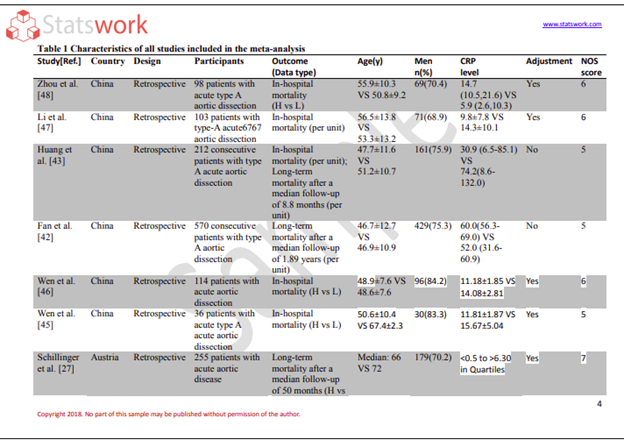
Data Analysis services
- Secondary Qualitative Research Services
- Secondary Quantitative Research Services
- Meta-Analysis Research services
- Sample Work
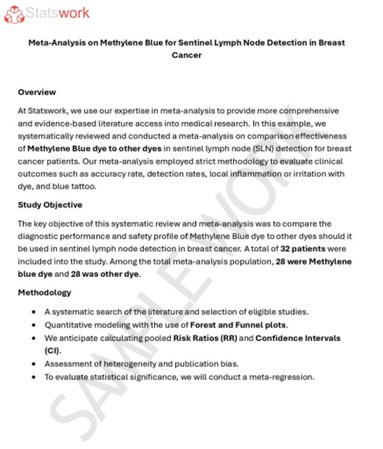
Meta-Analysis Research Services
- Data Collection Services
- Sample Work
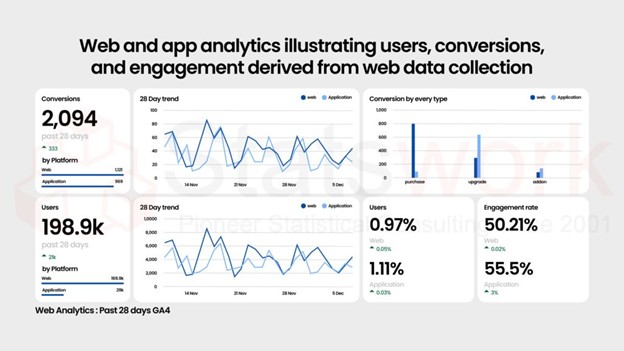
Data Collection Services
- Statistical & Biostatistics services
- Sample Work
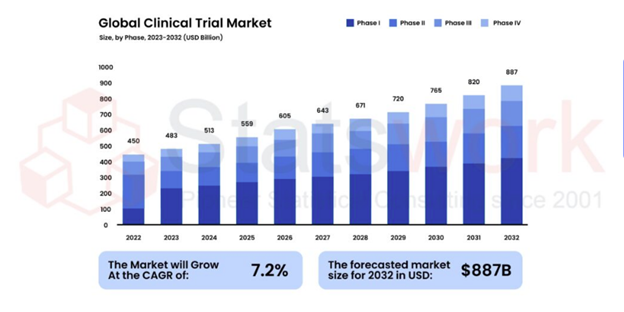
Statistical Programming & Biostatistics services
- Data Management Services
- Sample Work
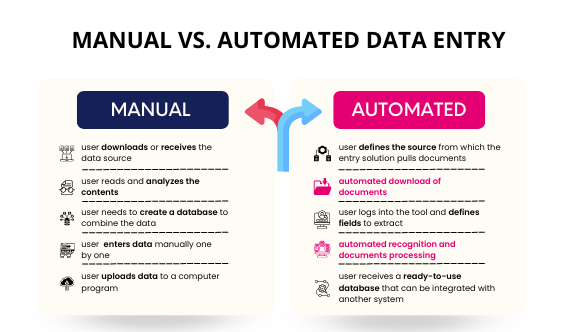
Data Management Services
- Research methodology services
- Sample Work
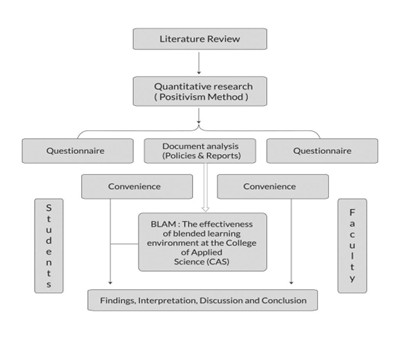
Research methodology services
- Tool Development Services
- Sample Work
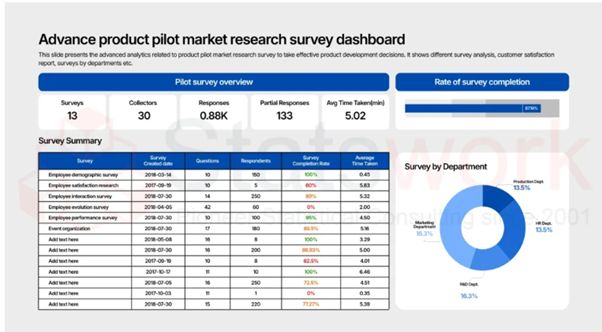
Tool development services
- Statistical Interpretation services
-
Statistical Interpretation services
- Sample Work
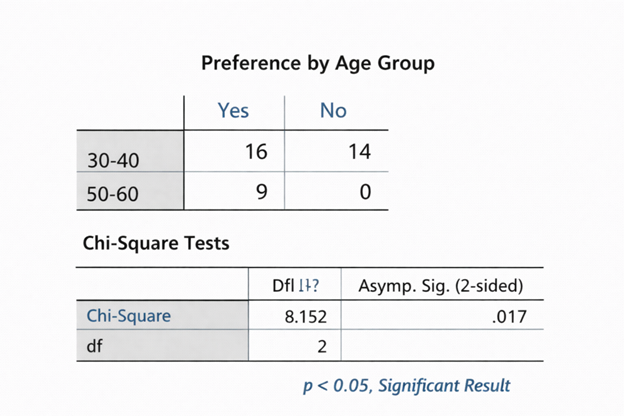
Statistical Interpretation services
-
- Sample Size Calculation Services
-
Sample Size Calculation Services
- Sample Work
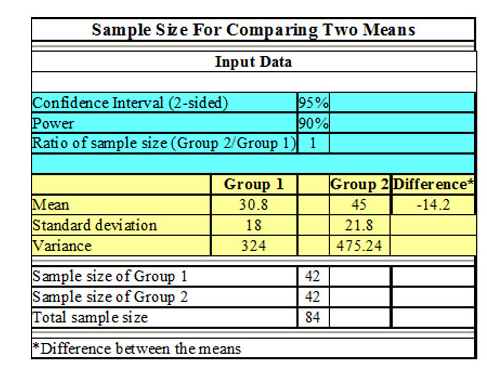
Sample Size Calculation Services
-
- AI & ML Services
-
Artificial Intelligence and Machine Learning Services
- Sample Work
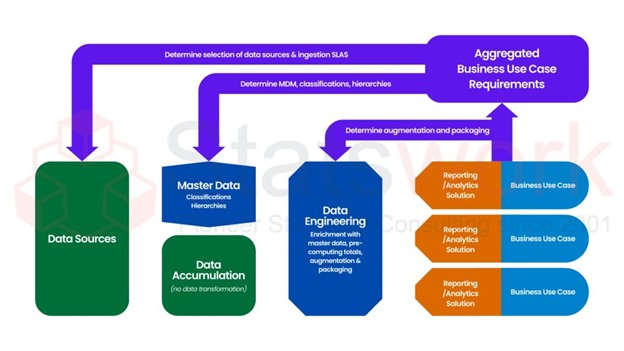
Artificial Intelligence and Machine Learning Services
-
- Meaningful Visualization Services
- Thought Leadership Services
- Report Generation Services
-
Report generation Service
- Sample Work
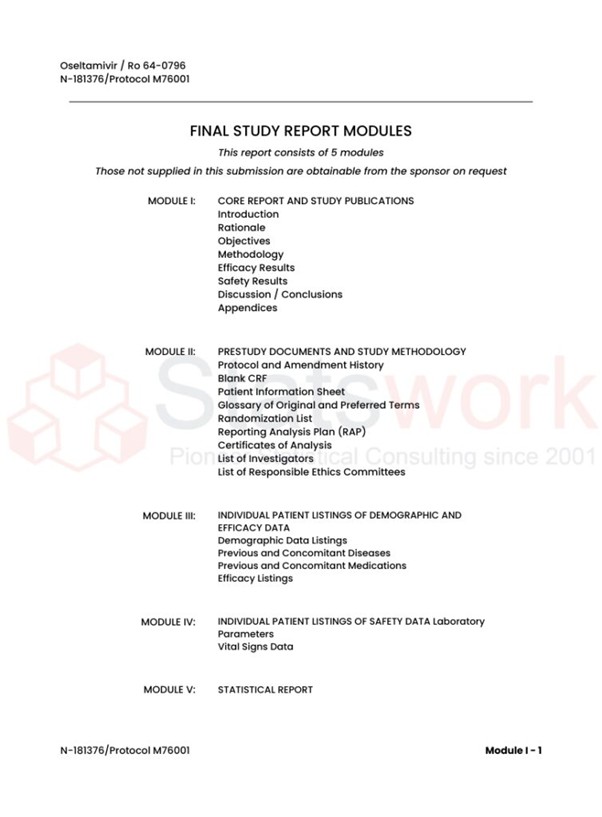
Report generation Services
-
- Data Analysis services
- Industries
- About Us
- Blog
- Insights
- Contact Us
- Services
- Data Analysis services
- Sample Work
Data Analysis services
- Secondary Qualitative Research Services
- Secondary Quantitative Research Services
- Meta-Analysis Research services
- Sample Work
Meta-Analysis Research Services
- Data Collection Services
- Sample Work
Data Collection Services
- Statistical & Biostatistics services
- Sample Work
Statistical Programming & Biostatistics services
- Data Management Services
- Sample Work
Data Management Services
- Research methodology services
- Sample Work
Research methodology services
- Tool Development Services
- Sample Work
Tool development services
- Statistical Interpretation services
-
Statistical Interpretation services
- Sample Work
Statistical Interpretation services
-
- Sample Size Calculation Services
-
Sample Size Calculation Services
- Sample Work
Sample Size Calculation Services
-
- AI & ML Services
-
Artificial Intelligence and Machine Learning Services
- Sample Work
Artificial Intelligence and Machine Learning Services
-
- Meaningful Visualization Services
- Thought Leadership Services
- Report Generation Services
-
Report generation Service
- Sample Work
Report generation Services
-
- Data Analysis services
- Industries
- About Us
- Blog
- Insights
- Contact Us
Statistical Programming in Biometrics: SAS, R, Python 2026
Meta Analysis Service
- Market Dominance: Which Languages Rule Biometrics in 2026
- SAS: The Undisputed Leader in Regulatory Biometrics
- Real-World Prevalence:
- Python: The Rapidly Ascending Challenger
- R: The Statistical Researcher's Choice
- Industry Distribution by Organization Type
- Statistical Programming in Biometrics: 2026 Outlook
- Conclusion
Recommended Reads
Contact us
Summary:
This blog post aims to analyze SAS, Python, and R as the most popular statistical programming languages used in the field of biometrics in 2026. Thus, the benefits of using each of these software products for analytical and regulatory submission processes, conducting clinical trials and analysis, applying machine learning, complying with CDISC standards, and performing research have been discussed. In addition, the tendency of hybrid programming, including the use of all three languages, has been described.
Medical device biometrics analytics programming languages are dominated by a triumvirate of statistical programming languages which account for 95% of all FDA submissions, clinical trials, and regulatory submissions made globally. Identifying the statistical programming languages which dominate the industry, and the reasons for their prevalence, is an important consideration for biostatisticians, data scientists, and entities which are involved in clinical trial data analysis services.
Market Dominance: Which Languages Rule Biometrics in 2026
The statistical programming landscape in medical device biometrics has undergone significant change. The industry trends have seen a rise in the use of statistical programming solutions:
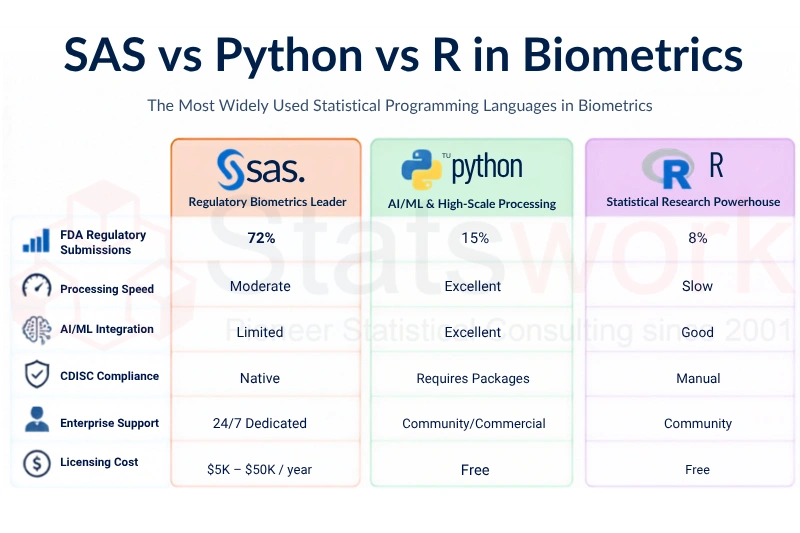
- SAS: 72% of FDA-regulated companies
- Python: 58% of organizations (up 34% since 2023)
- R: 41% of academic biostatisticians
- Hybrid approaches: 44% of enterprises
Most companies are leveraging multiple languages for statistical programming and analysis to meet diverse needs of regulatory submission while being able to take advantage of the advanced statistical capabilities and performance of different programming tools [1].
SAS: The Undisputed Leader in Regulatory Biometrics
SAS offers the most popular software among FDA’s regulatory statistical programming. The company’s products hold the biggest share in the market for medical device biometrics analytics due to more than 40 years of proven software development experience and regulatory approval.
Why SAS Leads:
- Industry-standard for CDISC SDTM and ADaM dataset creation
- 21 CFR Part 11 compliance built into core architecture
- Deterministic output ensuring reproducible clinical biostatistical
- Audit trails automatically generated for FDA submissions
- Complete documentation supporting regulatory justification [2]
Real-World Prevalence:
SAS programs produce around 65% of all the FDA-submitted biometrics datasets; organizations that outsource big volumes of biostatistics work rely on SAS to meet the regulatory requirements.
Enterprise Adoption Pattern:
Large pharmaceutical companies have on average 3-5 SAS programmers per clinical trial program. Mostly used procedures are PROC REPORT, PROC MEANS and PROC SQL for clinical trial data analysis, while for medical device biometrics the most used procedure is PROC GENMOD for complex statistical analysis [3].
Python: The Rapidly Ascending Challenger
Python’s use in medical device biometrics is becoming more rapid, given the growing need for AI in clinical biostatistics and the need to process data in real-time. Some current biostatistics outsourcing companies are now using the software for such high-intensity applications.
Growth Metrics:
- 34% year-over-year adoption increase (2023-2026)
- 89% of startups building biometrics solutions use Python-first approaches
- 52% of mid-market enterprises now integrate Python with SAS workflows
Why Python Gains Ground:
- 5-10x faster large-scale processing of medical device data
- Seamless ML integration (scikit-learn, TensorFlow)
- Modern development practices (version control, containers)
- Lower licensing costs for more cost-effective biostatistics outsourcing
- Open-source ecosystem with 400+ healthcare-specific libraries
Enterprise Implementation:
Python programming is adopted by pioneering firms for preparing data, carrying out the analysis process, building artificial intelligence algorithms, and validation of the outcomes in SAS to adhere to regulations [4]. Python programming and SAS are becoming increasingly popular in the industry.
R: The Statistical Researcher’s Choice
R is dominant in the academic, research, and clinical biostatistics communities, where it is often used for innovative statistical research. Although less common than SAS in commercial FDA submissions, R offers unparalleled statistical power.
R’s Market Position:
- 41% adoption rate in academic medical centers and research institutes
- Preferred language for publishing peer-reviewed clinical biostatistics articles
- Increasing use in FDA regulatory submissions (with appropriate validation)
- Dominant in specialized statistical modeling and bioinformatics analysis
Competitive Advantages:
- 20,000+ statistical packages (vs. 300 for SAS, 400 for Python)
- Publication-ready graphics and visualization
- State-of-the-art methodologies available in R community first
- Reproducible research framework for regulatory documents
Industry Distribution by Organization Type
Pharmaceutical Companies (Submissions to FDA)
- SAS: 85% | Python: 18% | R: 12%
- Target: Compliance and auditable trails
Medical Devices Companies
- SAS: 68% | Python: 42% | R: 8%
- Target: Real-time biometrics data analysis and compliance
Contract Research Organization (CROs)
- SAS: 78% | Python: 35% | R: 22%
- Target: Efficiency in multiple biostatistics outsourcing projects
Academic & Research Institutes
- R: 65% | Python: 58% | SAS: 28%
- Target: Advanced statistical techniques and peer-reviewed research
AI/ML-Specialized Biotech Startups
- Python: 92% | R: 45% | SAS: 12%
- Target: Machine Learning and rapid
Emerging Hybrid Strategies
The most sophisticated organizations now employ multi-language ecosystems:
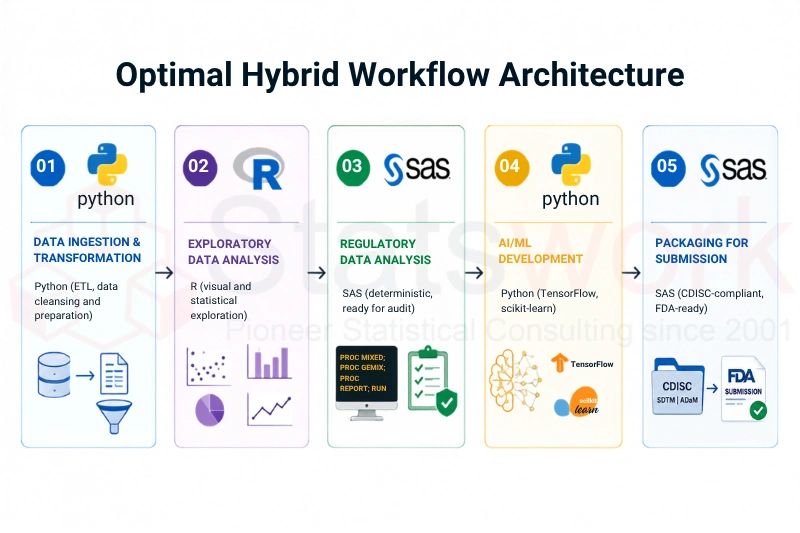
This well-coordinated strategy ensures both compliance and efficacy, exemplifying the future of outsourced enterprise biostatistics in 2026.
Statistical Programming in Biometrics: 2026 Outlook
Market Projections:
- SAS continues to dominate with 65-70% of FDA submissions (stable)
- Python is now at 40%+ with mature validation frameworks
- R retains 35-45% of the academic/research space
- Hybrid approaches are now enterprise standard (44% currently, projected to reach 60%+ by 2027)
Partner with Statswork for Statistical Programming Excellence
Our certified biostatisticians can assist you in all three platforms. They have the expertise of utilizing all statistical programming languages and processes according to the specific regulatory requirements. Thus, if you are working on any project be it medical device biometrics, clinical trial or research, our experts can help you with SAS, Python or R language or any other.
Our Expert Services:
- FDA regulatory statistical programming (SAS/Python/R)
- CDISC SDTM ADaM programming and validation
- Clinical trial data analysis services
- AI in clinical biostatistics implementation
- Hybrid workflow architecture design
🎯 Get Your Free Technical Assessment
Schedule a consultation with Statswork’s biostatisticians. We’ll evaluate your statistical programming requirements, recommend the optimal language strategy, and outline how our clinical trial data analysis services accelerate regulatory success.
Contact Statswork Today — Statistical Precision Meets Regulatory Excellence
Frequently Asked Questions (FAQs)
Yes, R remains highly relevant for statistical analysis, research, and biostatistics.
It is widely used for advanced statistical modelling and data visualization.
R can be easier for statistical tasks, while Python is more versatile for general programming.
The difficulty depends on your background and learning goals.
No, you do not need to learn R before Python.
Choose R for statistics and research, or Python for AI, automation, and broader programming.
Yes, you can build a strong foundation in R within three months with regular practice.
You can learn data manipulation, visualization, and basic statistical analysis.
No, R is not a dying language and remains important in statistics, research, and biostatistics.
Its specialized statistical capabilities continue to support its use.
Neither language is universally faster because performance depends on the task and implementation.
Python can be faster for some large-scale applications, while R performs well for many statistical operations.
References:
- Allam, I. M. A. (2026, May). Development and Comparative Evaluation of Duncan’s Multiple Range Test with One-Way ANOVA Using Python and C Programming Languages. https://www.researchgate.net/profile
- Al Alfi, M., Peris-Lopez, P., & Camara, C. (2025). Enhancing biometric identification using 12-lead ECG signals and graph convolutional networks. Frontiers in Digital Health, 7, 1547208. https://www.frontiersin.org/journals
- Sasikala, T. S. (2025). Multimodal secure biometrics using attention efficient-net hash compression framework. Digital Signal Processing, 160, 105018. https://www.sciencedirect.com/
- Sahidullah, M., Shim, H. J., Hautamäki, R. G., & Kinnunen, T. H. (2025). Shortcut learning in binary classifier black boxes: Applications to voice anti-spoofing and biometrics. IEEE Journal of Selected Topics in Signal Processing, 19(7), 1542-1557. https://ieeexplore.ieee.org/abstract