







statswork

Improving Research Validity with Expert PLS Regression Analysis Services

The services of our PLS Regression Analysts assist research organizations to create valid predictive models using complicated and correlated data using our Custom PLS Regression Analysis Services, allowing organizations to derive valid results with the use of our PLS-SEM and Partial Least Squares Modeling Services.

PLS Regression Analysis Services

Build Robust Predictive Models for Complex, Correlated Data

PLS regression analysis involves creating statistical models including PLS regression, PLS structural equation modeling (PLS-SEM), measurement models, and structural path models, among others. Through these models, organizations can make useful predictions even when the data does not adhere to the assumptions of regression analysis.

PLS regression analysis is very important in making sure that there is successful predictive research.

Through PLS regression analysis, organizations can model correlation between the independent and dependent variables

Build Robust Predictive Models for Complex, Correlated Data

that align with the goals of the organization without the errors of multicollinearity. At Statswork, we help organizations do custom PLS regression and PLS-SEM analysis through the help of our statistical experts. Statistical experts at Statswork assist organizations in creating scientifically structured predictive models.

Concept and Objective of PLS Regression Analysis

PLS regression analysis is an approach that aims at developing models to predict values from data that contain high levels of correlation among independent variables. This analysis guarantees proper measurements of relationships between latent and observable variables without bias due to the presence of correlated predictors.

Introduction to Research Tool Development icon

Introduction to PLS Regression Analysis

PLS regression analysis refers to a technique where predictor and response variables are projected onto latent components for use in developing predictive statistical models. Predictive statistical models are developed such that the relationship between the research variables is properly captured in order to derive proper data.

Steps of conducting PLS regression analysis include:

  • Correlation and multicollinearity analysis
  • Developing measurement and structural models
  • Evaluation and validation of latent constructs
  • Pilot modeling and refinement of the model
  • Testing for reliability and validity
  • Analysis of path coefficients and model fitness

This statistical modeling process ensures that organizations derive reliable predictive models from their research data.

Purpose of Research Tool Development icon

PLS Regression Analysis Purpose

Companies conduct PLS regression analysis to help in prediction that is used for making decisions, policymaking, product development, and research. When PLS regression models are created incorrectly, they may lead to problems such as increased variance, instability of coefficients, and wrong conclusions.

Professional PLS regression analysis will assist in:

  • Making reliable and valid predictions
  • Measuring research variables that are correlated in an orderly manner
  • Limiting the effect of multicollinearity on estimation biases
  • Correct interpretation and understanding of structural relations
  • Predictive research results credibility

Statswork assists companies in PLS regression and PLS SEM analysis.

Types of PLS Regression Analysis We Offer

Statswork develops a wide range of predictive and structural modeling solutions tailored to different research needs.

Our PLS Regression Modeling Services Include

The above-mentioned tools enable one to create an accurate and measurable predictive model.

Multicollinearity diagnostics and variance partitioning
PLS Structural Equation Modeling (PLS-SEM)
Development of Measurement Model
Tests for Validity and Bias

Multicollinearity diagnostics and variance partitioning

  • Latent components analysis
  • Benchmarking of the predictive model using OLS regression
  • Structural Equation Modeling capability

PLS Structural Equation Modeling (PLS-SEM)

  • Path modeling with latent variables
  • Construction of formative and reflective constructs
  • Significance testing of path coefficients through bootstrapping

Development of Measurement Model

  • Outer and inner loadings
  • Composite reliability and Cronbach’s alpha
  • Average Variance Extracted (AVE)

Tests for Validity and Bias

  • Convergent and Discriminant validity
  • Common method bias

Cross-loadings and Fornell-Larcker test

Our Industries

Through Statswork, organizations can gain Data-Driven Predictive Modeling’s impact — by having access to Research & Development, Analytics & PLS Regression Analysis across multiple industries to drive business decisions.

Validation Methods Used in PLS Regression Analysis

It will only be possible to achieve accuracy and reliability in the PLS regression models through statistical validation process. Several approaches are applied by Statswork to validate the PLS models scientifically.

Reliability Testing icon

Approaches for reliability testing

The goal behind reliability testing is to confirm that the measurement model produces reliable results on all the indicators of each latent construct.

Reliability testing approaches:

  • Cronbach's Alpha (Internal Consistency Testing)
  • Composite Reliability (CR)
  • Indicator (Outer) Loadings
  • Split-Half Reliability
Validity Testing icon

Bootstrapping and Significance Testing

The bootstrapping procedure is a type of resampling technique applied for assessing the statistical significance of the path coefficients in the structural model.

The approaches that are used include:

  • Path Coefficient (β) Estimation
  • Bootstrapping (5,000 resamples)
  • Coefficient of Determination (R²) and Effect Size (f²)
  • Predictive Relevance (Q²)
Statistical Accuracy icon

Validity testing

The validity testing approach is aimed at ensuring that the PLS model serves the purpose of prediction.

Validation approaches that are used include:

  • Convergent Validity
  • Discriminant Validity
  • Content and Face Validity
  • Criterion-Related Validity
Statistical Tools and Technologies Used

Statswork utilizes the latest statistical techniques to formulate and validate PLS regression models.

01

SmartPLS

  • Estimation of structural and measurement model
  • Bootstrap technique and PLS algorithm implementation
  • Visualization of path diagram
02

R / Python

  • PLS regression with special packages (plsRglm, scikit-learn)
  • Validation using cross-validation and component selection
  • Special script writing for big data and complex data
03

SPSS / SAS

  • Variance Inflation Factor and tolerance tests
  • Data preparation and preliminary regression modeling
  • Inferential statistics support

The above technologies will help in scientific validation of PLS regression models.

Our PLS Regression Analysis Process

Statswork adopts a well-defined and scientific procedure for developing the PLS regression models that have high level of reliability. The combination of our expertise and scientific methods will help in achieving valid, reliable, and informative research results.

Model Specification and Design
  • Developing measurement models through constructing latent constructs and indicators
  • Constructing structural models through building hypothesized paths
  • Modeling alignment with research objectives
Expert Review and Content Validity
  • Examining the model specification in terms of clarity and theoretical foundation
  • Exclusion of ambiguous and mis specified constructs
  • Alignment of model with research methodology
Reliability and Validity Testing
  • Reliability testing using statistical methods (CR, Cronbach’s Alpha)
  • Evaluation of convergent and discriminant validity
  • Measurement accuracy improvement
Pilot Estimation
  • Running pilot models with sample data
  • Examination of path coefficients
  • Model optimization
Data and Requirements Analysis
  • Objectives and hypotheses analysis
  • Independent, dependent, and latent variable analysis
  • Data Screening and Multicollinearity Model Development

End-to-End PLS Regression Analysis Support

Develop validated PLS regression models, generate reliable predictive insights, and strengthen research outcomes with expert statistical support for academic and business studies.

Expected Outputs of PLS Regression Analysis

The organizations adopting professionally done PLS regression analysis models enjoy many benefits.

The expected outputs are:

  • Robust and accurate predictive models even when there is multicollinearity among the data
  • Exact modeling of relationship between latent variables
  • Measurement and structural models validated that can be used in academic research
  • More credible research outputs
  • Useful research outputs for business decision making

The above outputs assist the organization in conducting predictive research.

Benefits of PLS Regression Analysis offered by Statswork

Statswork assists organizations, researchers and institutions to develop predictive models that provide effective results.

The benefits of our services include:

  • More accurate in dealing with multicollinear and high dimensional data
  • Scientifically validated PLS regression and PLS-SEM models
  • Systematically developed measurement and structural models
  • More credible dissertation, thesis and journal research
  • Better decision making with reliable predictions

Our PLS regression models help the organizations to derive insights on:

  • T technology and product adoption behavior
  • Customer satisfaction and loyalty
  • Employee engagement and organizational performance
  • Consumer perception and intention to buy
  • Complex multi variable social and behavioral research

PLS Regression Model Development by Statswork

Our related research services include:

  • Data Collection Services
  • Statistical Data Analysis
  • Research Interpretation and Reporting
  • Multiple Regression Analysis Services

Through this integrated research support we assist the organization in creating a validated predictive model using their raw data.

Industries Applying for Our PLS Regression Analysis Services

Our PLS regression analysis helps organizations in various industries such as:

  • Academic & University Research
  • Public Health & Healthcare Research
  • Marketing Research & Consulting
  • Corporate & Enterprise Research
  • Government & Policy Research

All of these industries need predictive models in order to reach conclusions and derive research findings.

Why choose Statswork for Your PLS Regression Analysis?

Statswork offers end-to-end services in designing and validating the PLS regression models. The advantages are as follows:

  • Advanced knowledge on multivariate statistical techniques
  • Advanced knowledge on Statistical validation techniques
  • Customized PLS regression & PLS-SEM model building
  • Biased and reliable predictive model design
  • End-to-end research support

Our statisticians can make sure that your PLS regression model is designed with the purpose of generating accurate research results.

Success Stories
Insights - Must Read Articles

Data Dictionary Mapping

The medical device industry is about to experience a seismic shift…

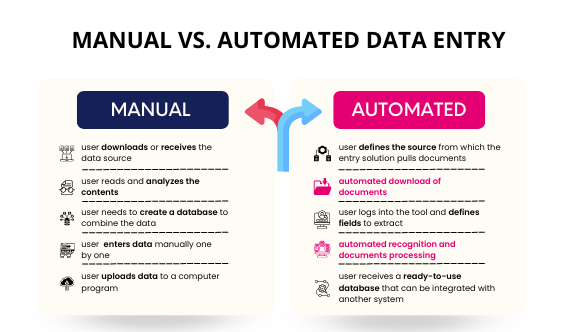
The Next Era of Data Entry

Healthcare is being impacted by two emerging technology tools – AI…

Reduces Errors and Boosts Efficiency

As organizations utilize changing data in the digital world, so is the data entry….

Frequently Asked Questions

1. What is PLS regression analysis?

PLS (Partial Least Squares) regression analysis is a statistical technique used to model relationships between multiple predictors and response variables. It is especially effective for complex datasets with multicollinearity and small sample sizes.

2. What is a PLS analysis?

PLS analysis is a multivariate statistical method that identifies relationships between observed and latent variables. It is widely used for predictive modeling and structural equation modeling in research.

3. Is PLS a type of regression?

Yes, PLS is a type of regression analysis that combines features of principal component analysis and multiple regression. It is designed to improve prediction when variables are highly correlated.

4. What is the difference between OLS and PLS?

Ordinary Least Squares (OLS) regression requires independent predictor variables, while PLS can effectively handle multicollinearity and high-dimensional data. PLS is preferred for complex predictive modeling.

5. How to do PLS in Excel?

Excel does not provide a built-in PLS regression function. PLS analysis is typically performed using specialized statistical software such as SmartPLS, R, MATLAB, or Python.

6. What are the four types of regression?

The four common types of regression are Linear Regression, Multiple Regression, Logistic Regression, and Partial Least Squares (PLS) Regression. Each method is used based on the research objective and data characteristics.

Contact Statswork today to build scientifically validated PLS regression models for your organization.