




Developing an Interview Guide for Quality and Reliable Qualitative Data Collection
As part of our service provision, we shall assist in developing interview guides to be used in conducting interviews which would lead to quality and reliable data collection. An effective interview guide offers guidelines during the interview process, leading to quality data collection.
Scientific Design of Interview Guides for Quality Research
Interview guides are fundamental tools in qualitative research that help researchers investigate attitudes, opinions, behaviors, perceptions, experiences, and motivations. In any kind of research, whether it be academic, marketing-related, health-based, policy-related, organizational, or otherwise—a well-designed interview guide will increase the effectiveness of the research process. Inadequate design of interview guides may result in insufficient answers from respondents, as well as introduce interviewer bias and poor data collection practices. Hence, scientific development of interview guides is what we are interested in.
Services: Interview Guide Development Services
Our firm designs customized interview guides that assist in carrying out structured, semi-structured, and in-depth interviews within academic, business, health care, government, and social research settings.
Introduction to Interview Guide Development
Interview guide development is essentially a systematic approach to developing interview questions, interview themes, and interviewing processes that lead to a thorough qualitative data gathering process.
This process entails:
- Research objectives formulation
- Identification of research themes
- Question formulation
- Probing questions formulation
- Designing interview process
- Respondent’s instructions formulation
- Interviewer instructions formulation
- Pilot testing of interview guide
- Validation of content validity of interview guide
- Interview guide refining
Such processes facilitate the construction of effective and reliable interview guides.

Need for Interview Guide Preparation
Interview guides serve an important purpose to gain detailed insights which cannot be acquired using surveys or other techniques.
Uses of interview guides may include:
- Academic research
- Market research
- Medical research
- Social science research
- Consumer research
- Organizational research
- Employee engagement surveys
- Public policy research
- Community research

Structured interview guides use standardized questions to ensure consistency and reliability across all participants. They help researchers collect comparable data and maintain objectivity throughout the study.
Structured Interview Guides
Consistency is provided through structured questions.
Uses:
- Large-scale research projects
- Program evaluation
- Organizational studies
- Medical research
Semi-Structured Interview Guides
Uses:
- Qualitative research
- Market research
- Research papers
- Customer experience research
In-Depth Interview Guides
Detailed questioning of the participant’s views is possible through such guides.
Uses:
- Behavioral research
- Social sciences
- Medical research
- Policy research
Our Industries
Quality evaluation of interview guides is an important step to achieve clarity and validity of interview guides.
Identification of Research Objectives and Formation of Framework
The first step includes formulation of research objectives and the development of a framework for conducting interviews.
Activities:
- Setting research objectives
- Setting information needs
- Formulation of thematic framework
- Formation of interview domains
- Development of Interview Guides

This stage includes the formation of interview guides using the research framework as a basis.
Activities:
- Preparation for interview questions
- Preparation for probing questions
- Preparation of interview structure
- Development of discussion process

Expert Validation and Pilot Interviews
Interview guides will be validated by experts in the subject while pilot interviews would highlight areas of improvement in interview guides.
Activities:
- Expert validation
- Pilot interviews
- Question improvement
- Content validation

The company Statswork uses modern analysis and research tools for the creation of the interview guide along with its validation.
Python
- Text Analytics
- Interview Data Analysis
- Pattern Recognition
Steps to Construct Interview Guide
A systematic interview guide development process ensures the creation of reliable, relevant, and research-focused interview instruments. It helps researchers collect high-quality qualitative data through well-structured questions, validation, and standardized implementation.
Conducting Needs Analysis for Research
- Determination of research objectives
- Setting information needs
- Targeting appropriate respondents
Developing a Conceptual Framework
- Research themes
- Discussion issues
- Objectives of conducting an interview
Question Construction
- Main questions formulation
- Follow up questions formulation
- Interview procedure design
Piloting Test
- Pilot interviews
- Question assessment
- Feedback from the interviewer
Validation & Improvement
- Expert validation
- Content analysis
- Improving the guide
Creating an Interview Guide
- Creation of the interview guide
- Interviewer’s guide creation
- Providing research tools
Guaranteeing Reliable Qualitative Insights Using Scientific Interview Guides
A scientifically constructed interview guide provides high-quality data, avoids interviewer bias, and helps obtain a comprehensive insight into the experiences and views of the participants.
Benefits with our Interview Guide Designing Services
Some of the benefits you can look forward to using our interview guide services include:
- Quality qualitative data
- Standardization of interviews
- Improved respondent engagement
- Increased validity of study
- Reliable findings
- In-depth qualitative insights
- Decision making based on facts
Advantages of Our Interview Guide Designing Services
As a professional team at Statswork, we help researchers and organizations develop interview guides to derive useful and practical insights.
The advantages that we offer in interview guide designing include:
- Tailored interview guides
- Research-specific construction
- Scientific approach to development
- Professional validation services
- Expertise in qualitative research
- Comprehensive assistance
Using our interview guide designing services, organizations will be able to gain an insight into:
- Customers' perceptions
- Employees' experiences
- Viewpoints of stakeholders
- Community views
- Challenges faced by organizations
- Impacts of policies
- Behavior patterns
Services in Research Instrument Design
Moreover, we provide:
- Research instrument design service
- Questionnaire design service
- Survey design service
- Statistical analysis service
- Qualitative analysis service
- Data collection service
- Research methodology service
Research Instrument Design Service
Our services are available to:
- Universities/Academic Institutions
- Healthcare institutions
- Government institutions
- Research institutions
- Corporate institutions
- Consultancy firms
- NGOs
- Market Research Firms
- Social Development Institutions
Benefits of Interview Guide Development by Statswork
Our statswork team has the knowledge and experience in qualitative research, interviews, and research instruments to develop scientifically sound interview guide templates.
Why Choose Us?
- Qualitative research knowledge
- Preparation of scientifically validated interview
- Validation of scientific procedure
- Customized to specific industries
- Research instruments complete support
- Development methodological best practices
- Publication service
We endeavor to help researchers develop a valid interview guide using our knowledge and experience.
Data Dictionary Mapping
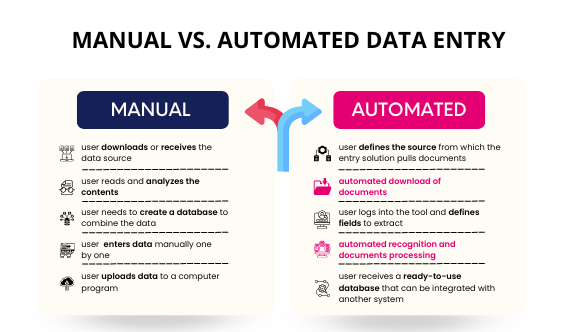
The Next Era of Data Entry
Reduces Errors and Boosts Efficiency
Frequently Asked Questions
1. What is interview guide development?
Interview guide development is the process of creating a structured set of questions, discussion topics, and probing prompts that help researchers conduct consistent and effective interviews while collecting reliable qualitative data.
2. What is the 30-60-90 rule in an interview?
The 30-60-90 rule refers to a framework where candidates outline their goals and action plans for the first 30, 60, and 90 days in a new role, demonstrating their preparedness and strategic thinking.
3. What are the 5 C’s of an interview?
The 5 C’s of an interview are Confidence, Communication, Competence, Credibility, and Compatibility, which are key qualities interviewers assess when evaluating candidates.
4. What is the interview process for GCI?
The Generalized Conversational Interviewing (GCI) process involves structured questioning, active listening, probing for detailed responses, clarifying participant perspectives, and systematically documenting information for analysis.
5. What is the 7-38-55 rule to crack any interview?
The 7-38-55 rule suggests that communication impact is influenced by 7% spoken words, 38% tone of voice, and 55% body language, highlighting the importance of non-verbal communication during interviews.
6. What is a red flag in a job interview?
A red flag in a job interview is any warning sign that indicates potential concerns about a candidate or employer, such as poor communication, lack of preparation, inconsistent answers, unrealistic expectations, or unprofessional behavior.
Need Help Developing an Effective Interview Guide?
Statswork provides expert interview guide development services to help you design structured, research-oriented interview frameworks that ensure meaningful participant responses and high-quality qualitative data. Contact our specialists today for customized interview guide solutions.